The GRAS Loophole Is Closing: Senate Bill Would Force Companies to Disclose Every Food Ingredient to FDA
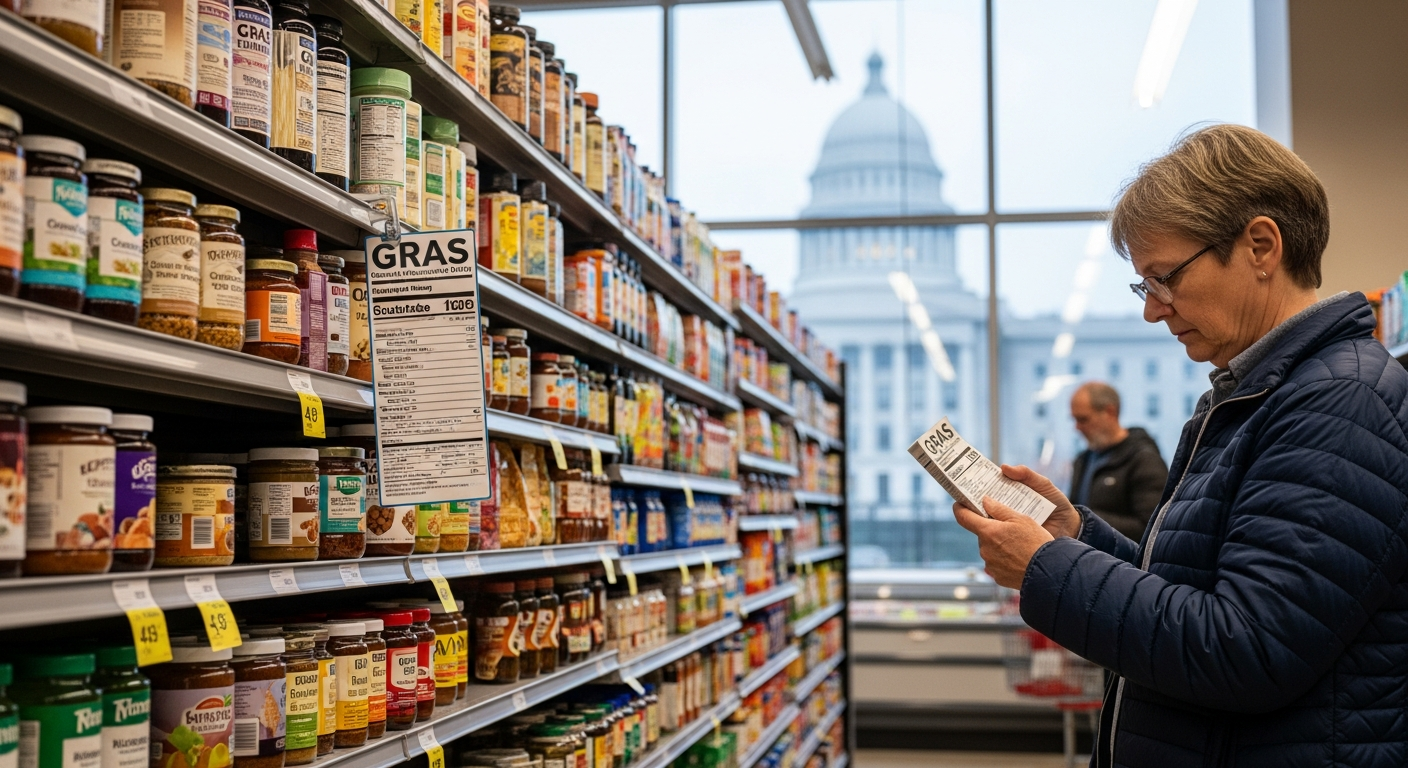
For decades, food companies in the United States have been able to add ingredients to your food without ever telling the FDA. A loophole known as "self-affirmed GRAS" has allowed manufacturers to determine on their own that an ingredient is "Generally Recognized as Safe" and put it on the market with zero federal review. On November 6, 2025, a bipartisan group of senators introduced legislation that could finally close that loophole.
What the Better Food Disclosure Act Proposes
The Better Food Disclosure Act of 2025 (S. 3122), introduced by Senator Roger Marshall (R-KS) and cosponsored by Senators Katie Britt (R-AL) and Rick Scott (R-FL), would fundamentally restructure how food ingredients are regulated in the United States.
The bill's core provisions would end the self-affirmed GRAS pathway entirely. Under the proposed law, every substance used in food would need to be reported to the FDA. New GRAS substances would require notification to the agency 120 days before their first use in food introduced into interstate commerce. The FDA would then have 180 days to respond. If the agency does not object within that timeframe, the ingredient would automatically be added to a public GRAS list.
For ingredients already on the market under self-affirmed GRAS determinations, manufacturers would have a two-year compliance period to submit notices for each substance. There is no grandfathering provision -- every existing self-affirmed ingredient must go through the notification process.
How the GRAS Loophole Works Today
The GRAS framework was created in 1958 as a practical exception for ingredients with a long history of safe use, like salt and vinegar. Congress never intended it to become a pathway for novel food chemicals to bypass FDA review entirely.
But that is exactly what happened. Over the decades, the food industry developed a practice of hiring consultants to convene panels of experts who would review a company's own safety data and declare an ingredient GRAS. The company would then add the ingredient to its products without notifying the FDA or making the safety determination public.
The scale of this practice is staggering. An estimated 10,000 or more additives are currently permitted in the U.S. food supply, and a significant portion entered the market through self-affirmed GRAS determinations that the FDA has never reviewed. The agency literally does not know about all the chemicals being added to American food.
Why This Matters Now
The Better Food Disclosure Act arrives at a moment when public awareness of food ingredient safety has reached a peak. The Make America Healthy Again (MAHA) movement, championed by Health Secretary Robert F. Kennedy Jr., has put food additives at the center of national health policy debate. Kennedy and MAHA leaders have repeatedly called the GRAS process a "loophole" that allows companies to add unhealthy ingredients to food without oversight.
The bill also coincides with FDA's own efforts to tighten GRAS regulation. In November 2025, the FDA sent its proposed rule requiring mandatory notification of self-affirmed GRAS substances to the Office of Management and Budget for review. Whether the legislative or regulatory approach moves faster remains to be seen, but the direction is clear: the era of unreviewed food ingredients is ending.
The 10,000-Additive Question
If the bill passes, the food industry faces an enormous compliance challenge. Thousands of ingredients currently used in processed foods would need to be documented, their safety data compiled, and notifications submitted to the FDA within two years.
For consumers, the impact could be transformative. A public GRAS list would mean, for the first time, a complete accounting of every ingredient the FDA has been notified about. Ingredients that cannot demonstrate safety through legitimate scientific review could be challenged and potentially removed from the food supply.
The bill also empowers states and citizens to petition the FDA to review the safety of ingredients already in the food supply, creating a mechanism for the public to push back on questionable additives.
What the Bill Does Not Do
The Better Food Disclosure Act focuses on transparency and notification, not outright bans. It does not automatically remove any ingredient from the market. Instead, it ensures the FDA is aware of and has the opportunity to review every substance added to food.
The bill also does not address the broader question of whether the FDA has adequate resources to review thousands of GRAS notifications within the 180-day window. Critics point out that the agency's Human Foods Program, while allocated $1.17 billion in the November 2025 shutdown deal, faces constraints on enforcement capacity that could limit its ability to conduct thorough reviews.
A Bipartisan Moment for Food Safety
What makes this legislation notable is its bipartisan nature. In a deeply polarized Congress, food ingredient safety has emerged as a rare area of agreement. The MAHA movement draws support from both conservative and progressive constituencies, and the Better Food Disclosure Act reflects that alignment.
The Environmental Working Group praised the bill, stating that it represents "a critical step toward ensuring that the food Americans eat is actually safe." Industry groups have been more cautious, acknowledging the need for transparency while expressing concerns about the compliance timeline and regulatory burden.
What This Means for Your Grocery Cart
If the Better Food Disclosure Act becomes law, it would mark the most significant reform to food ingredient regulation since the Food Additives Amendment of 1958. For the first time, every chemical added to American food would be subject to at least minimal FDA awareness and potential review.
For consumers who have wondered what is really in their food and why the United States permits ingredients banned in dozens of other countries, this bill represents the beginning of an answer. Whether it passes will depend on sustained public pressure and bipartisan commitment to food safety over industry convenience.
Stay ahead of the label.
Get early access to VeriFoods and be the first to see what's really in your food.
Sources
- Civil Eats - "Senate Introduces Food Ingredient Disclosure Bill, Addressing MAHA Concerns" - November 6, 2025. https://civileats.com/2025/11/06/senate-introduces-food-ingredient-disclosure-bill-addressing-maha-concerns/
- National Law Review - "Congress Moves to Strengthen FDA Oversight of Food Substances with 'Better Food Disclosure Act of 2025'" - 2025. https://natlawreview.com/article/congress-moves-strengthen-fda-oversight-food-substances-better-food-disclosure-act
- EWG - "EWG statement on Sen. Marshall's Better Food Disclosure Act" - November 2025. https://www.ewg.org/news-insights/statement/2025/11/ewg-statement-sen-marshalls-better-food-disclosure-act
- Wiley - "Reforming GRAS: Digesting the Proposed 'Better Food Disclosure Act' (S. 3122)" - 2025. https://www.wiley.law/alert-Reforming-GRAS-Digesting-the-Proposed-Better-Food-Disclosure-Act-S3122
- Senator Roger Marshall - "Senator Marshall Introduces Legislation to Ensure Safer Food for American Families" - 2025. https://www.marshall.senate.gov/newsroom/press-releases/senator-marshall-introduces-legislation-to-ensure-safer-food-for-american-families/
Related Articles

111 Chemicals Were Secretly Added to Your Food. The FDA Had No Idea.
At least 111 chemicals of unknown safety have been added to foods, drinks, and supplements sold in the United States...
The FDA Promised to Ban Artificial Food Dyes. Instead, It Rewrote the Rules.
The FDA quietly abandoned its pledge to eliminate six synthetic food dyes by 2026, pushed the deadline to 2027, and...
MAHA Commission Report Calls for Sweeping Food Reforms Amid Citation Controversy
White House health assessment links childhood chronic disease crisis to food additives and calls for elimination of...