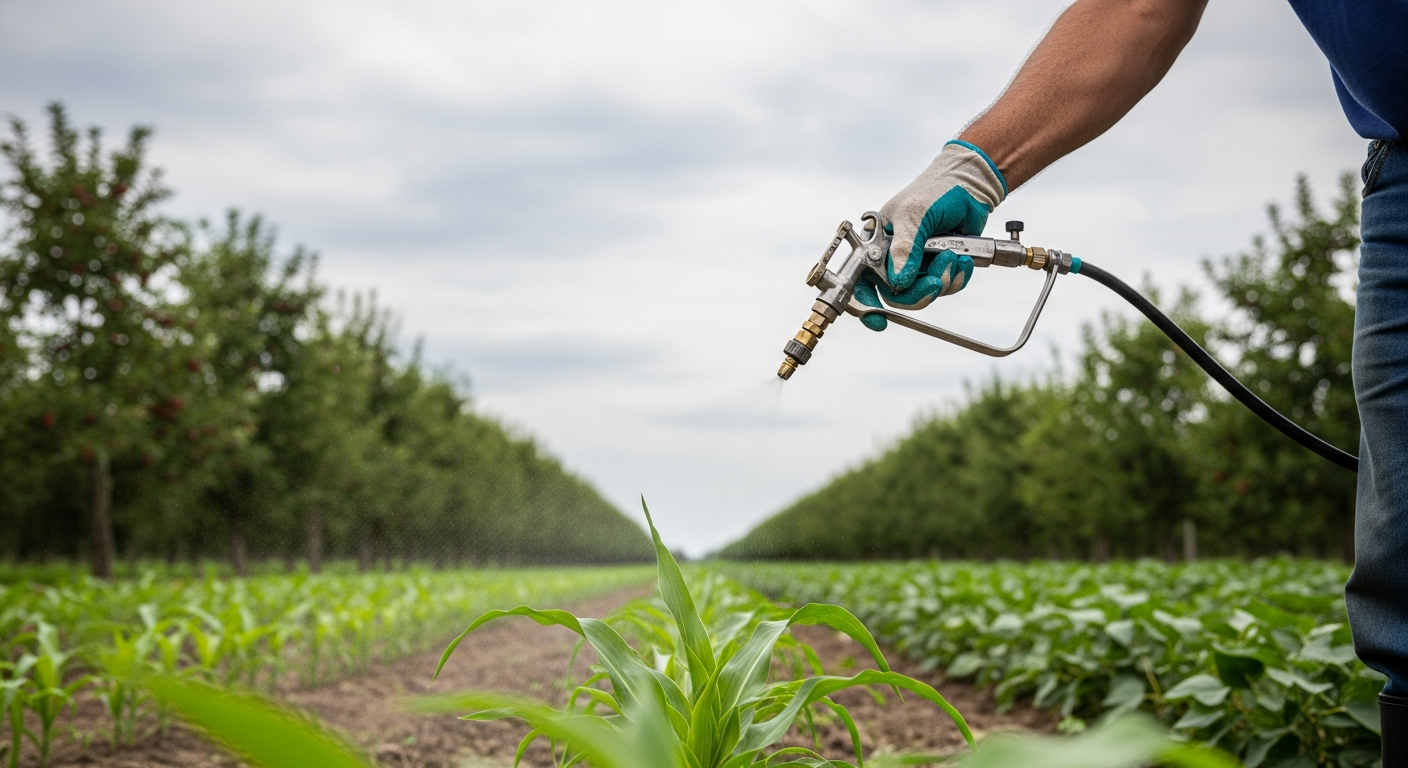
EPA Approves Pesticides Containing 'Forever Chemicals' for Corn, Apples, and Soybeans
While the Make America Healthy Again movement promises to clean up the nation's food supply, the Environmental Protection Agency quietly proposed approval of four new pesticides that contain "forever chemicals." Between April and June 2025, the EPA moved to greenlight products from Bayer, Syngenta, and BASF designed for use on crops Americans eat every day, including corn, soybeans, apples, oranges, and peanuts.
All four chemicals qualify as PFAS (per- and polyfluoroalkyl substances) under the definition used by the Organisation for Economic Co-operation and Development and supported by 20 international scientific experts. PFAS are called "forever chemicals" because they do not break down in the environment and accumulate in human tissue. The CDC has detected PFAS in the blood of 99% of Americans tested, including newborn babies.
Which Pesticides Were Approved
Three of the four proposals came in June 2025, according to reporting by Civil Eats:
A Bayer herbicide designed for corn and soybeans. Corn and soy are two of the most widely grown crops in the United States and serve as base ingredients in thousands of processed foods, from cereal to salad dressing to infant formula.
A Syngenta field-crop insecticide that can be applied as a seed treatment. Seed treatments coat seeds before planting, meaning the chemical is present throughout the growing cycle of the plant.
A BASF herbicide approved for oranges, apples, peanuts, and other crops. These are foods that consumers, including children, eat directly rather than as processed ingredients.
The fourth product, also from Syngenta, targets nematode pests in Romaine lettuce and soybeans. The EPA proposed its approval in April 2025.
The Definition Fight
The approvals triggered a scientific and political battle over how PFAS should be defined. The dispute matters because the definition determines which chemicals face regulatory scrutiny and which ones slip through.
The OECD definition, widely used by scientists and governments internationally, identifies PFAS by their chemical structure: any substance containing at least one fluorinated carbon. Under this definition, all four approved pesticides are PFAS.
The EPA's Office of Pollution Prevention and Toxics uses a narrower definition, requiring at least two fluorinated carbons. This difference allowed the EPA to approve chemicals that 20 international experts warned are PFAS without triggering the regulatory restrictions that come with that classification.
A group of 20 scientific experts on PFAS published a statement supporting the OECD definition, arguing that adopting narrower definitions could hamper effective regulation of these chemicals. Bayer responded by stating its herbicide "is not a PFAS substance" according to the EPA's framework.
The Environmental Working Group called the EPA's position "semantics over science," noting that the chemicals share the same fundamental property that makes PFAS dangerous: they persist in the environment and the human body indefinitely.
Why This Matters for Your Food
PFAS contamination in food was already a growing concern before these approvals. The FDA has detected PFAS in seafood, meat, dairy products, and vegetables, including shrimp, clams, catfish, tilapia, beef, chicken, milk, and kale. For millions of Americans, food (not water) is the primary route of PFAS exposure.
Adding PFAS-containing pesticides to widely grown crops creates a new, direct pathway for forever chemicals to enter the food supply. When a PFAS herbicide is sprayed on an apple orchard, the chemical does not simply disappear after it kills the weeds. It persists in the soil, can be absorbed by the fruit, and enters the water table where it may contaminate drinking water downstream.
The crops affected by these approvals are not niche products. Corn and soybeans are the raw materials for a significant percentage of American processed food. Apples are the second most consumed fruit in the country. Oranges are a staple in school lunches. Peanuts are a foundational ingredient in snack foods.
The MAHA Contradiction
The timing of these approvals collides with the administration's high-profile MAHA (Make America Healthy Again) initiative, which has publicly called for reducing Americans' exposure to harmful chemicals in food. The MAHA Commission's May 2025 report specifically identified chemical exposures as a threat to public health.
Approving PFAS-containing pesticides for use on food crops while simultaneously claiming to champion food purity has drawn sharp criticism from environmental and public health organizations. The EWG called on EPA Administrator Lee Zeldin to reverse course, characterizing PFAS pesticides as "bad news, not fake news."
What This Means for You
Consumers cannot wash off PFAS the way they might remove some pesticide residues. Forever chemicals bond at a molecular level and persist through cooking, rinsing, and processing. Organic certification currently does not address PFAS in pesticides, leaving even organic-labeled produce potentially affected if PFAS-treated fields contaminate surrounding soil or water.
You can reduce exposure by choosing produce from sources you trust, diversifying your diet so you are not repeatedly consuming the same potentially affected crops, and supporting independent testing efforts. Tools like VeriFoods track pesticide data for specific products, helping consumers identify which items have been evaluated for contamination.
The broader question is whether the EPA's narrow PFAS definition will hold. With 20 international scientists publicly disagreeing, growing state-level PFAS restrictions, and mounting litigation against PFAS manufacturers, the regulatory environment around forever chemicals continues to shift. For now, consumers should know that a new class of these persistent chemicals has been approved for the food supply.
Sources
- Civil Eats - "EPA Approves Four New Pesticides That Qualify as PFAS" - September 8, 2025. https://civileats.com/2025/09/08/epa-approves-four-new-pesticides-that-qualify-as-pfas/
- The New Lede - "Another PFAS-containing pesticide headed for US registration" - May 2025. https://www.thenewlede.org/2025/05/pfas-in-pesticide-epa/
- Environmental Working Group - "EWG to Lee Zeldin: PFAS pesticides are bad news, not 'fake news'" - December 2025. https://www.ewg.org/news-insights/news/2025/12/ewg-lee-zeldin-pfas-pesticides-are-bad-news-not-fake-news
- Civil Eats - "What to Know About PFAS in Pesticides" - December 10, 2025. https://civileats.com/2025/12/10/what-to-know-about-pfas-in-pesticides/