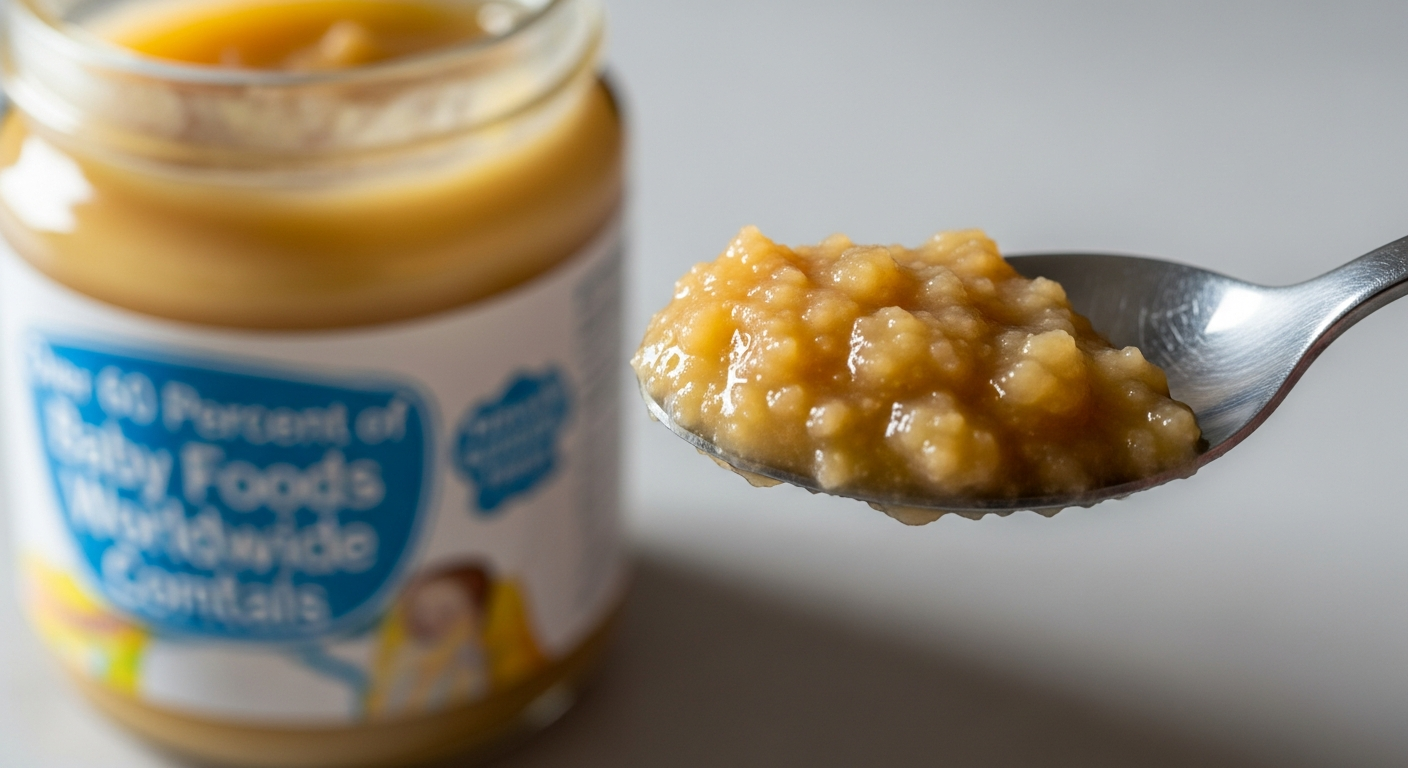
Over 60% of Baby Foods Worldwide Contain Heavy Metals, New Study Finds
More than 60% of baby foods and infant formulas worldwide contain detectable levels of toxic heavy metals, according to a comprehensive scoping review published in Nutrition Reviews. The peer-reviewed study analyzed 75 research papers examining 580 baby foods and 251 infant formulas globally, finding cadmium, lead, and arsenic in the majority of products tested, with mercury present in over 30%.
The findings represent the most extensive analysis to date of heavy metal contamination in infant nutrition products, affecting families across multiple continents regardless of brand, price point, or regulatory environment.
Fish and Rice Products Show Highest Contamination
Baby foods containing fish, rice, and cereals emerged as the highest-risk categories, with particularly concerning levels of lead and arsenic contamination.
For arsenic specifically, the study found the highest median concentration in mixed fish products at 0.165 mg/kg, followed by rice mixes at 0.048 mg/kg. Alarmingly, 89% of mixed fish items and 30% of rice mix products exceeded established arsenic maximum limits.
Lead and cadmium contamination proved nearly universal in certain categories, appearing in 97% of roots and tubers tested. Fish and fish mix items contained lead, arsenic, and mercury in 100% of samples analyzed.
Overall contamination rates across all baby food products showed 73% tested positive for arsenic, 72% for cadmium, 69% for lead, and 34% for mercury.
Infant Formulas Exceed Lead Safety Limits
The review found that more than 60% of infant formulas worldwide exceeded maximum lead limits, with the highest concentrations detected in stage 1 and 2 formulas designed for infants 12 months or younger.
Lead median concentrations in both stage 1 and stage 2 formulas measured 0.015 mg/kg, with over 60% of samples surpassing regulatory maximum limits. This finding is particularly concerning given that infants consuming formula as their primary nutrition source face repeated exposure to these metals during critical periods of brain development.
Separate testing by Children's Hospital of Philadelphia found heavy metals in 63% of infant formulas examined, with lead detected in 74% of samples, cadmium in 61%, arsenic in 63%, and mercury in 42%.
Why Heavy Metals Pose Special Risks to Infants
Infants and young children face heightened vulnerability to heavy metal exposure because their brains are rapidly developing. During the first years of life, neural pathways form at unprecedented rates, and toxic metals can interfere with this critical process.
Lead exposure in early childhood has been linked to reduced IQ, attention deficits, and behavioral problems. Arsenic can impair cognitive development and immune function. Cadmium affects kidney function and bone development. Mercury damages the developing nervous system.
Children's Hospital of Philadelphia experts emphasize that even low levels of exposure matter during these vulnerable developmental windows, as the effects can be permanent and irreversible.
Consumer Reports Testing Prompted FDA Action
The Nutrition Reviews study validates earlier findings from Consumer Reports, which tested 41 baby formulas for heavy metal contamination in March 2025. That investigation documented widespread presence of lead and arsenic in formula products and identified stage 1 and 2 formulas as posing the greatest risks to babies under 12 months.
Following the Consumer Reports findings, the FDA announced a new initiative to strengthen oversight of the formula industry, including increased testing for heavy metals and other contaminants. The global scoping review provides additional scientific support for these regulatory efforts.
Global Problem Requires International Response
The review's authors conducted advanced database searches across four electronic databases between October 15-18, 2024, to identify peer-reviewed articles examining heavy metal concentrations in infant nutrition products worldwide. The inclusion of studies from multiple countries and continents demonstrates that contamination is not limited to specific regions or regulatory environments.
Fifteen studies within the review specifically reported health risks related to intake of contaminated foods, underscoring the clinical significance of these findings beyond laboratory measurements.
The researchers emphasized the need for stricter regulations and adoption of internationally defined maximum level frameworks to protect infant health globally.
What This Means for Parents
While the findings are concerning, parents should understand that levels of metals in food represent only one component of a child's total environmental exposure. Heavy metals can enter children's bodies through air, water, dust, and soil in addition to food sources.
The study reinforces the importance of product diversity in infant diets. Parents feeding babies rice-based products or fish-containing baby foods may want to rotate between different food categories to minimize exposure to any single contamination source.
For formula-fed infants, the research highlights why ongoing regulatory oversight and manufacturer accountability matter. Parents cannot eliminate heavy metal exposure entirely, but stronger testing requirements and contamination limits can reduce the total burden on developing bodies.
The global nature of these findings also underscores the value of independent testing that examines specific products and brands, rather than relying solely on category-level assumptions about safety.
Sources
- Nutrition Reviews - "Concentrations of Heavy Metals in Processed Baby Foods and Infant Formulas Worldwide: A Scoping Review" - November 17, 2025. https://academic.oup.com/nutritionreviews/advance-article/doi/10.1093/nutrit/nuaf138/8256392
- News Medical - "New review reveals which baby foods carry the highest heavy metal risks" - November 17, 2025. https://www.news-medical.net/news/20251117/New-review-reveals-which-baby-foods-carry-the-highest-heavy-metal-risks.aspx
- PubMed - "Concentrations of Heavy Metals in Processed Baby Foods and Infant Formulas Worldwide: A Scoping Review" - 2025. https://pubmed.ncbi.nlm.nih.gov/40972552/
- Consumer Reports - "We Tested 41 Baby Formulas for Lead and Arsenic" - March 2025. https://www.consumerreports.org/babies-kids/baby-formula/baby-formula-contaminants-test-results-a7140095293/
- Children's Hospital of Philadelphia - "Infant Formula and Heavy Metals: What Parents Need to Know" - 2025. https://www.chop.edu/news/health-tip/infant-formula-heavy-metals
Related Articles
65% of Baby Foods Worldwide Contain Heavy Metals, Lancet Study Finds
A January 2026 scoping review published in The Lancet Regional Health found heavy metals in 65% of processed baby foods...

Heavy Metals Found in 65% of Baby Foods Worldwide, Rice and Soy the Worst
Lead, cadmium, and arsenic contaminate the majority of baby foods and infant formulas sold worldwide. That is the...

FDA Sets First Lead Limits for Baby Food as California Forces Transparency
On January 6, 2025, the FDA set specific limits on how much lead can be in baby food for the first time. The action...