Pesticide Toxicity to Insects Jumped 50% in Seven Years. One Country Is on Track.
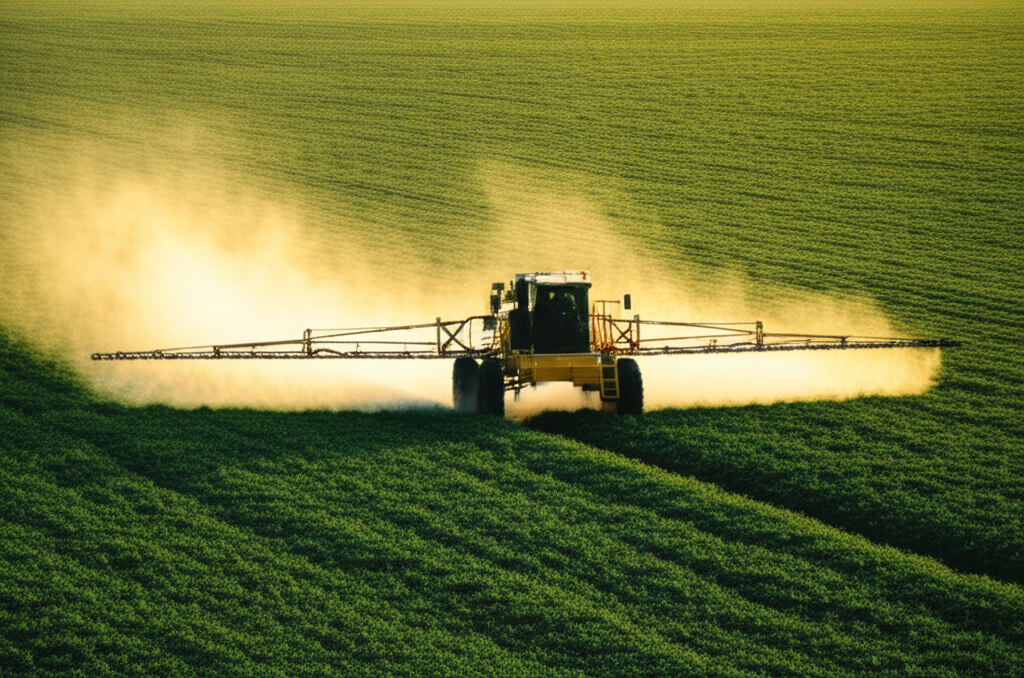
The world is not just spraying more pesticides. It is spraying more toxic ones. A study published February 5, 2026, in the journal Science found that the total toxic burden of pesticides applied to cropland worldwide increased significantly between 2013 and 2019, with toxicity to land-dwelling insects jumping nearly 50% in just seven years.
Researchers at RPTU Kaiserslautern-Landau in Germany analyzed 625 pesticide active ingredients across 65 countries covering 79.4% of global cropland. Their findings revealed a crisis hiding in plain sight: the chemicals being applied to the food supply are becoming more dangerous to living organisms, not less. And out of every country studied, only Chile is projected to meet the United Nations' 2030 goal of halving pesticide risk.
A New Way to Measure the Problem
For decades, the standard metric for tracking pesticide trends has been volume: how many tons of chemicals get sprayed each year. That number alone is alarming. According to a thorough analysis published in Frontiers in Toxicology, global agricultural pesticide use rose from 1.81 million metric tons in 1990 to 3.69 million metric tons in 2022, a 104% increase. The Natural History Museum reports global use has roughly doubled since the 1990s, now reaching approximately 4 million tonnes annually.
But the Science study introduces a more telling metric called Total Applied Toxicity, or TAT. Rather than measuring how much pesticide gets sprayed, TAT quantifies how harmful those chemicals actually are to living organisms. The distinction matters because newer pesticides can be applied in smaller quantities while being far more lethal to specific species.
"This gives us a whole new perspective on the potential risks to biodiversity from pesticide use," said Ralf Schulz, a professor at RPTU Kaiserslautern-Landau and senior author of the study.
The results were stark. TAT increased in six of eight species groups analyzed. Terrestrial insects saw the fastest rise, with toxicity climbing approximately 6.4% per year, totaling roughly 50% over the study period. Soil organisms and fish experienced toxicity increases of about 30%. Only aquatic plants and land-based vertebrates showed slight declines.
The Foods That Carry the Heaviest Burden
The study's most directly relevant finding for consumers is which crops account for the most applied toxicity. Fruits, vegetables, corn, soybeans, cereals, and rice account for 76% to 83% of all global TAT, according to the Science paper.
These are not specialty crops or exotic ingredients. They are the staples that fill grocery carts every week: the apples in a child's lunchbox, the rice in a family dinner, the corn processed into hundreds of packaged foods. When pesticide toxicity rises on these crops, the effects ripple directly through the food supply.
More than 50% of global applied toxicity is concentrated in just four countries: Brazil, China, the United States, and India, according to the Earth.com analysis of the findings. Nigeria currently has the lowest toxicity levels among countries studied, but faces rising risk from rapid agricultural growth.
Why the UN's 2030 Goal Is Effectively Dead
At the COP15 biodiversity summit, nations committed to halving pesticide risk by 2030. The Science study reveals how far off track that goal has gone. Of the 65 countries analyzed, only Chile is projected to achieve the target. China, Japan, and Venezuela are showing some downward trends, but Germany and most other nations would need to reverse their trajectory to levels from more than 15 years ago to have any chance.
"This rise is driven in part by higher pesticide amounts being applied and in part by the growing toxicity of the active ingredients themselves," Schulz explained.
Jakob Wolfram, lead author of the study, highlighted the data gap that makes course correction even harder: "Updated annual data on agricultural pesticide use, broken down by active ingredient, is needed to enable real-time progress tracking."
The researchers noted that FAO data suggests the trends likely continued past the study's 2019 cutoff, meaning the situation has almost certainly worsened since.
What Drives the Toxicity
All three major classes of pesticides contributed to the increase. Herbicides, insecticides, and fungicides all pushed TAT upward across the study period. But the damage they do varies by organism.
Pyrethroids and organophosphates cause severe harm to insects and fish, according to the Natural History Museum analysis. Neonicotinoids strongly affect pollinators, the bees and butterflies essential to food production. Fungicides heavily impact soil life, the microorganisms that keep agricultural land productive.
Here is the part that should make policymakers pay attention: roughly 20 active ingredients are responsible for more than 90% of toxic impacts on insects, worms, and wildlife. Targeted policy action on a small number of chemicals could produce outsized improvements. But so far, few governments have chosen to act.
The Human Health Connection
These chemicals are not just harming ecosystems. They are reaching people. The Frontiers in Toxicology review found that many agricultural pesticides function as endocrine disruptors, developmental toxicants, and reproductive toxicants. Over 1,300 chemicals have been flagged as endocrine disruptor screening priorities in the United States, yet fewer than 100 underwent first-tier testing by 2022.
Occupational pesticide exposure correlates with reduced sperm motility and DNA damage. Pregnant women exposed to pesticides face increased risk of spontaneous abortion. And residues on food remain the primary exposure pathway for the general population, particularly children, whose developing organs, nervous systems, and immune systems make them especially vulnerable.
What the Experts Say
Independent scientists have broadly endorsed the study's methodology and significance. Pilar Sandin, a researcher at Spain's INIA-CSIC agricultural research institute, called it a "comprehensive and robust analysis" and noted that "reversing TAT requires integrated biological solutions, precision technologies, appropriate agricultural practices and supportive public policies."
Monica Martinez Haro, a researcher at CSIC/IREC, described the work as "highly relevant, high-quality research" but cautioned that the findings may be "partly underestimated" due to incomplete pesticide data collection in many countries. The real numbers could be worse.
What This Means for Your Grocery Cart
The study confirms what many food safety advocates have warned about for years: measuring pesticide volume alone misses the point. A smaller amount of a more toxic chemical can do more damage than a larger amount of a less toxic one. For consumers, this means that simply choosing products labeled "reduced pesticide" or "responsibly grown" provides no guarantee of lower exposure to the most harmful compounds.
What matters is knowing which specific pesticide residues appear on the products you buy, and how toxic those specific chemicals are. Tools like VeriFoods allow consumers to scan product barcodes and see independently tested pesticide residue data, providing visibility into what actually ends up on your plate rather than relying on volume-based metrics that obscure the real risk.
Fruits, vegetables, rice, corn, and soybeans carry roughly 80% of the global toxic pesticide burden. The foods families eat most often are also the ones most affected. Checking lab-tested results before buying remains one of the few ways to make informed choices when 64 out of 65 countries are moving in the wrong direction.
Sources
Science - "Increasing applied pesticide toxicity trends counteract the global reduction target to safeguard biodiversity" - February 5, 2026. https://www.science.org/doi/10.1126/science.aea8602
Phys.org - "Increasing pesticide toxicity threatens global biodiversity protection goal: Only one country is currently on target" - February 5, 2026. https://phys.org/news/2026-02-pesticide-toxicity-threatens-global-biodiversity.html
Natural History Museum - "Nature is under threat from rapidly rising pesticide use" - February 2026. https://www.nhm.ac.uk/discover/news/2026/february/nature-under-threat-from-rapidly-rising-pesticide-use.html
Earth.com - "Rising pesticide use is putting more ecosystems at risk" - February 2026. https://www.earth.com/news/rising-pesticide-use-is-putting-more-ecosystems-at-risk/
EcotoxBlog - "Pesticide Toxicity is Rising - And It's Putting the UN's 2030 Biodiversity Goal at Risk" - February 2026. https://ecotox-blog.uni-landau.de/pesticide-toxicity-is-rising-and-its-putting-the-uns-2030-biodiversity-goal-at-risk/
Frontiers in Toxicology - "Pesticides, an urgent challenge to global environmental health and planetary boundaries" - 2025. https://www.frontiersin.org/journals/toxicology/articles/10.3389/ftox.2025.1656297/full
Science Media Centre - "The use, toxicity and ecological harm of pesticides are increasing at the global scale" - February 2026. https://sciencemediacentre.es/en/use-toxicity-and-ecological-harm-pesticides-are-increasing-global-scale