Ultra-Processed Foods Now Linked to 12 Chronic Diseases in Largest Study Ever Published
The most comprehensive analysis ever published on ultra-processed foods and human health has arrived, and the findings are unambiguous. A landmark series published in The Lancet in November 2025 reviewed 104 long-term studies and found that 92 of them showed higher risks for at least one chronic disease associated with ultra-processed food consumption. The meta-analyses identified significant links to 12 distinct health conditions, confirming what researchers have long suspected: ultra-processed foods are driving a global health crisis.
What The Lancet Found
The Lancet series represents years of collaborative research synthesizing evidence from studies conducted across multiple countries and populations. The systematic review examined long-term observational studies tracking the relationship between ultra-processed food intake and health outcomes over extended periods.
Of the 104 studies reviewed, the signal was overwhelming. Eighty-eight percent showed that higher ultra-processed food consumption was associated with increased risk for at least one chronic disease. The meta-analyses -- which combine data across studies for greater statistical power -- identified significant associations with 12 health conditions, including obesity, type 2 diabetes, cardiovascular disease, and several types of cancer.
The researchers found that a 10% increase in the proportion of ultra-processed foods in a person's diet was associated with a measurable increase in cancer risk. This dose-response relationship suggests that even modest reductions in UPF consumption could yield meaningful health benefits.
The 12 Diseases Linked to Ultra-Processed Foods
The Lancet series identified significant associations between ultra-processed food consumption and the following conditions:
- Obesity -- UPFs promote overconsumption through engineered palatability
- Type 2 diabetes -- linked to blood sugar dysregulation from refined ingredients
- Cardiovascular disease -- associated with inflammation and metabolic disruption
- Cancer (multiple types) -- including breast cancer and colorectal cancer
- Depression and anxiety -- connected through the gut-brain axis
- Metabolic syndrome -- the cluster of conditions that increase heart disease risk
- Non-alcoholic fatty liver disease -- driven by excessive sugar and refined fat intake
- Inflammatory bowel disease -- linked to additive-driven gut microbiome disruption
- Chronic kidney disease -- associated with high sodium and phosphate additive loads
- All-cause mortality -- higher UPF intake correlated with earlier death from any cause
These are not marginal associations found in a handful of small studies. They emerge consistently across large populations and long timeframes, meeting the scientific standard for robust evidence.
More Than Half of American Calories
Ultra-processed foods now account for more than 50% of daily calories consumed in the United States. This statistic alone explains much of the country's chronic disease burden. Americans are eating more calories from products engineered in factories than from whole foods prepared in kitchens.
The Lancet series documents how this pattern is not unique to the United States. Ultra-processed foods are globally displacing long-established diets centered on whole foods and traditional preparation methods. National food intake surveys and global sales data show UPF consumption rising on every inhabited continent, with the sharpest increases occurring in middle-income countries where Western food manufacturers are aggressively expanding.
What Makes Ultra-Processed Foods Dangerous
The health risks of ultra-processed foods stem from multiple mechanisms working simultaneously:
Nutritional imbalance: UPFs deliver too much sugar, unhealthy fats, and sodium while providing too little fiber, protein, and essential micronutrients. This combination promotes overeating and metabolic dysfunction.
Harmful additives: The processing required to create shelf-stable, hyper-palatable products involves additives -- emulsifiers, artificial colors, flavor enhancers, preservatives -- that may independently cause harm. Emulsifiers, for example, have been shown to disrupt gut barrier function in laboratory studies.
Engineered overconsumption: UPFs are designed to maximize eating speed and minimize satiation. Their soft textures, intense flavors, and precise salt-fat-sugar ratios override the body's natural fullness signals, leading to consistent overconsumption.
Displacement of whole foods: Every calorie consumed from ultra-processed sources is a calorie not consumed from nutrient-dense whole foods. This displacement effect compounds the direct harms of UPFs with the indirect harm of nutritional deficiency.
The Seed Oil Connection
A related finding from researchers at Scientific American highlighted that ultra-processed foods high in seed oils could be specifically fueling colorectal cancer risk. While seed oils themselves are not necessarily harmful in moderation, their massive concentration in ultra-processed foods creates exposure levels far beyond what any traditional diet would produce.
The Johns Hopkins Bloomberg School of Public Health addressed this nuance in an October 2025 media briefing. Researchers emphasized that seed oils found in whole food contexts (salad dressings, cooking oils) behave differently in the body than the same oils embedded in ultra-processed food matrices with dozens of other additives.
How to Identify Ultra-Processed Foods
Ultra-processed foods are defined by the NOVA food classification system as industrial formulations with five or more ingredients, typically including substances not used in home cooking: high-fructose corn syrup, hydrogenated oils, modified starches, protein isolates, and various additives.
Common examples include:
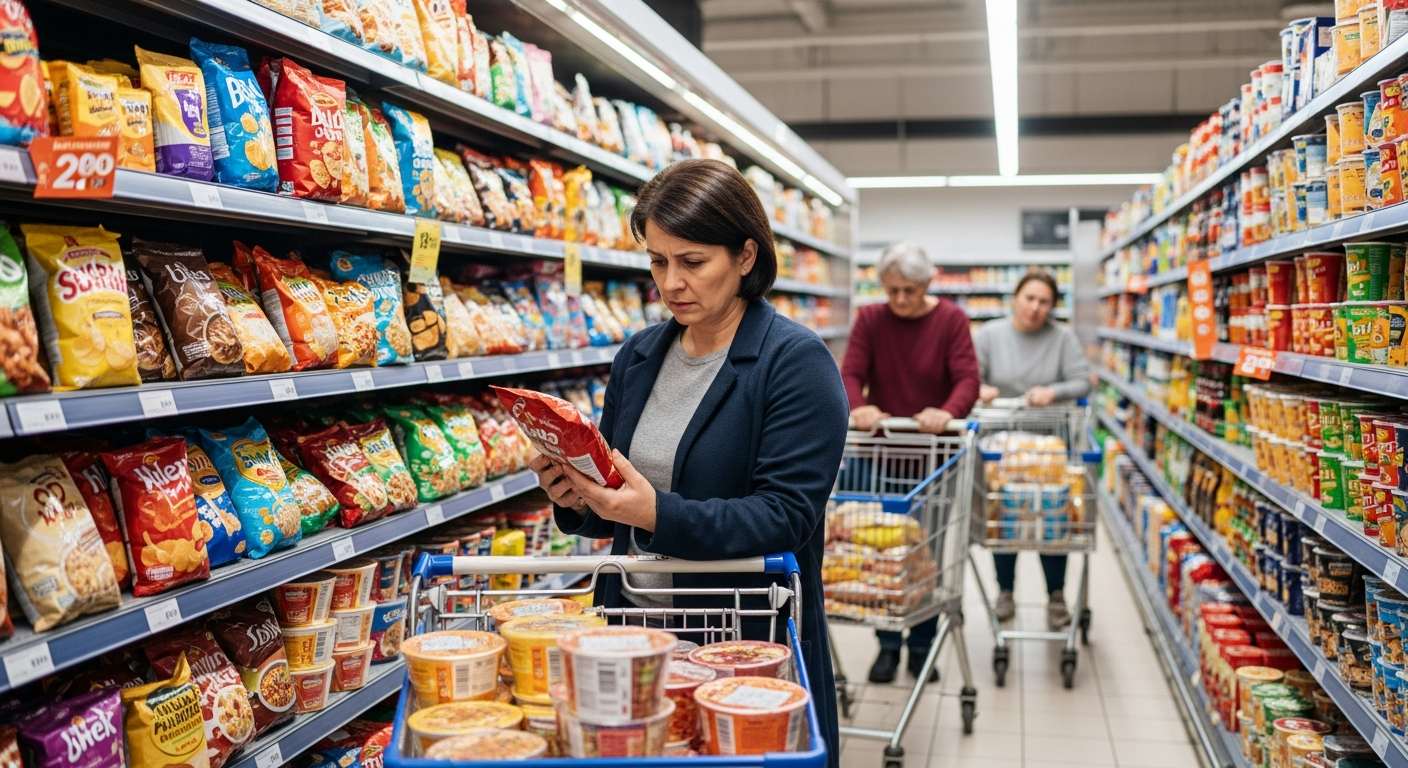
- Packaged snack foods (chips, cookies, crackers)
- Sugary drinks and energy beverages
- Instant noodles and soups
- Frozen meals and pizza
- Breakfast cereals with added sugars
- Processed meats (hot dogs, chicken nuggets)
- Flavored yogurts with added sugars
- Most fast food items
A useful rule: if the ingredient list contains substances you would not find in a home kitchen, or if the product could not be made with basic cooking equipment, it is likely ultra-processed.
What You Can Do
Reducing ultra-processed food consumption does not require perfection. The Lancet data suggests that even incremental reductions in UPF intake correlate with improved health outcomes. Practical steps include:
- Cook more meals at home using whole ingredients
- Read ingredient lists and avoid products with ingredients you don't recognize
- Replace packaged snacks with whole fruits, nuts, and vegetables
- Choose minimally processed versions of staples (plain yogurt vs. flavored, whole grain bread vs. white)
- Plan meals to reduce reliance on convenience foods
- Use food safety apps to quickly evaluate product ingredients and processing levels
Stay ahead of the label.
Get early access to VeriFoods and be the first to see what's really in your food.
Sources
- ScienceDaily - "Global surge in ultra-processed foods sparks urgent health warning" - November 24, 2025. https://www.sciencedaily.com/releases/2025/11/251124025654.htm
- The Lancet - "Ultra-processed foods and human health: the main thesis and the evidence" - 2025. https://www.thelancet.com/journals/lancet/article/PIIS0140-6736(25)01565-X/abstract
- Scientific American - "Ultraprocessed Foods High in Seed Oils Could Be Fueling Colon Cancer Risk" - 2025. https://www.scientificamerican.com/article/ultraprocessed-foods-high-in-seed-oils-could-be-fueling-colon-cancer-risk/
- Johns Hopkins Bloomberg School of Public Health - "Media Briefing: Seed Oils and Ultra-Processed Foods" - October 2025. https://publichealth.jhu.edu/2025/media-briefing-seed-oils-and-ultra-processed-foods
Related Articles
Federal Dietary Guidelines Now Warn Against Seed Oils and Ultra-Processed Foods
The 2025-2030 Dietary Guidelines for Americans mark a historic shift: for the first time, the federal government...
New Review Links Ultra-Processed Foods to Colorectal, Breast, and Pancreatic Cancer
A comprehensive scoping review of 15 years of research found consistent associations between ultra-processed food...

Walmart voluntarily phasing out synthetic dyes in their private label brands
By VeriFoods Walmart has announced a major shift in its approach to food ingredients, pledging to eliminate synthetic...