Your Brain Now Contains a Spoonful of Plastic, and Levels Are Rising Fast
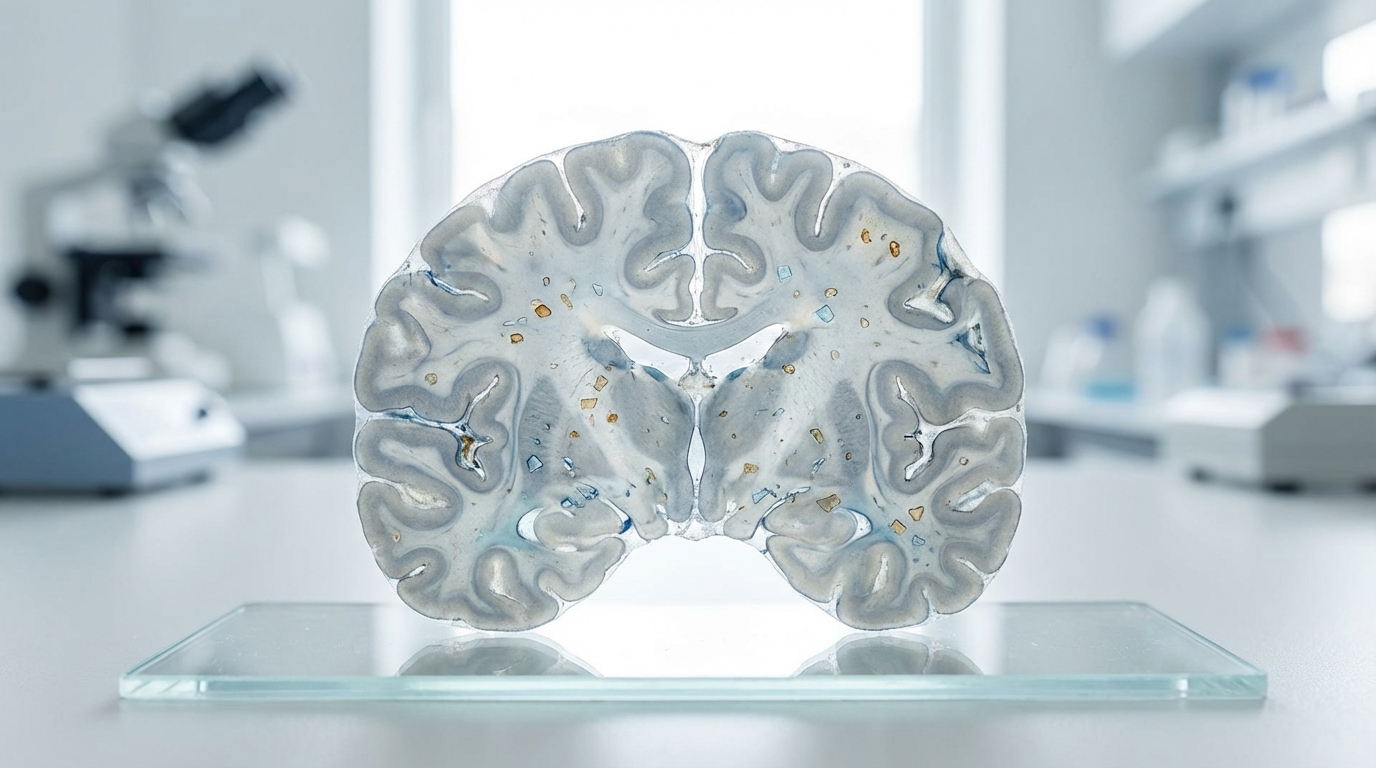
Human brains now contain microplastics at concentrations equivalent to the weight of a standard plastic spoon. That finding comes from a study published February 3, 2025, in Nature Medicine by researchers at the University of New Mexico. The team measured brain plastic concentrations at 4,800 micrograms per gram of tissue, or 0.48% by weight. That percentage has climbed roughly 50% in just eight years.
The core dataset included 52 frontal cortex specimens from postmortem donors: 28 collected in 2016 and 24 in 2024. The team also examined 27 historical samples from 1997 to 2013 and 12 specimens from individuals diagnosed with dementia. Every sample contained plastic.
The Brain Absorbs More Plastic Than Other Organs
What sets this research apart from earlier microplastics studies is the organ-specific comparison. Brain tissue harbored higher proportions of polyethylene than either liver or kidney tissue from the same donors, according to the Nature Medicine paper. That distinction matters because polyethylene is the plastic most commonly used in food packaging, bottles, and cups.
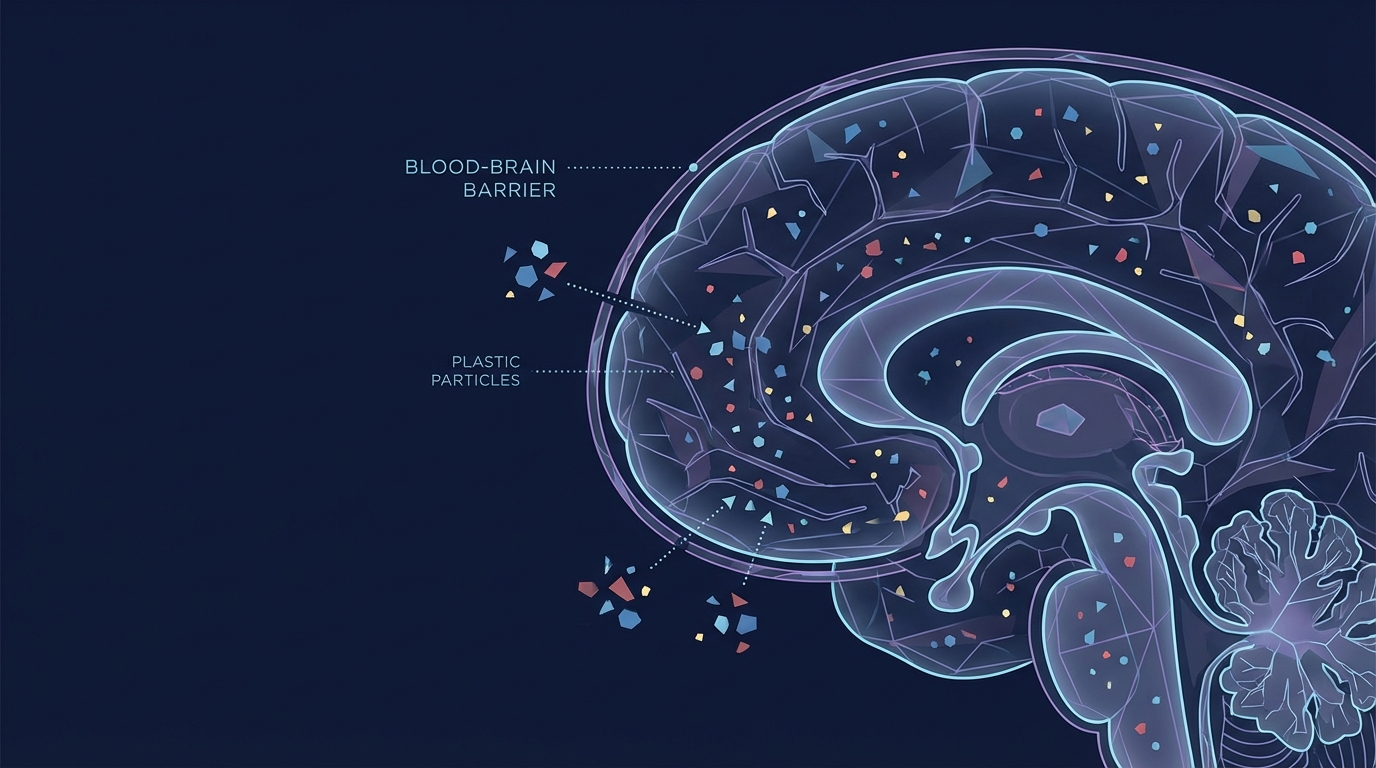
These were not the large fragments people typically picture when they think of plastic pollution. Electron microscopy revealed nanoscale shard-like fragments approximately 200 nanometers in length. For scale, that is roughly the size of two COVID-19 virus particles placed side by side. At that size, these fragments are small enough to cross the blood-brain barrier, the protective membrane that shields the brain from most foreign substances in the bloodstream.
Twelve different polymers were detected across the samples, but polyethylene dominated. The prevalence of a food-packaging plastic in brain tissue at concentrations exceeding those in the liver (the body's primary filtering organ) raises direct questions about ingestion as a primary route of exposure.
A 50% Increase in Eight Years
The trend line in this study is as important as the raw numbers. Comparing samples collected in 2016 to those collected in 2024, the researchers documented a roughly 50% increase in brain plastic concentrations over that span.
"I never would have imagined it was this high," said Matthew Campen, PhD, Distinguished and Regents' Professor at UNM's College of Pharmacy, who led the research. As he told reporters, "Every time we scratch the surface, it uncovers a whole host of, 'Oh, is this worse than we thought?'"
Historical specimens from 1997 to 2013 showed lower concentrations still. With each passing decade, more plastic is making its way into human brain tissue.
The Dementia Connection
The most unsettling part of the data involved the dementia samples. Brain tissue from individuals diagnosed with dementia contained three to 10 times more microplastics than tissue from non-dementia subjects. The UNM team found plastic deposited in cerebrovascular walls and embedded within immune cells in the affected brains.
The Washington Post reported that levels in the 12 dementia brains were three to five times higher than in the other specimens. The UNM newsroom reported a figure of up to 10 times higher, suggesting variability across individual samples.
The researchers were direct about what this does and does not prove. "Brain tissue from dementia patients contained up to 10 times more plastic than others, though researchers cannot definitively determine if high plastic levels caused dementia or accumulated due to disease progression," the UNM newsroom stated. The study makes no claims of causation, only correlation. It is possible that brains affected by dementia simply lose the ability to clear foreign particles. Answering the causation question will require longitudinal studies that track living patients over time.
Prof. Gary Hardiman of Queen's University Belfast, commenting independently through the Science Media Centre, called the results "compelling evidence of the pervasive presence of microplastics and nanoplastics in human tissues, highlighting a worrying trend of increasing concentrations over time, particularly in the brain." Other independent experts emphasized that the findings are "primarily associative" and should not be interpreted as proving that microplastics cause dementia.
Where the Plastic Comes From
Polyethylene's dominance in brain tissue points toward food and beverage packaging as a major source. Polyethylene is used to make plastic bags, food wrap, bottle caps, squeeze bottles, and the plastic lining inside paper cups. Americans encounter it dozens of times per day.
Ultra-processed foods represent another major exposure route. These products go through multiple stages of manufacturing and packaging, each involving plastic contact surfaces. Research from Columbia University, published in 2024, found approximately 240,000 plastic particles per liter of bottled water. Even what seems like a health-conscious swap (bottled water instead of tap) can substantially increase microplastic ingestion.
Once ingested, the smallest fragments (nanoplastics below 1,000 nanometers) can cross the intestinal wall into the bloodstream. From there, as this study demonstrates, they reach the brain. The 200-nanometer particles found in brain tissue are small enough to move through barriers that block larger molecules.
What This Means for You
Scientists have not yet established a direct cause-and-effect link between brain microplastics and specific diseases. But the direction of the evidence is consistent: plastic concentrations in the brain are rising, and higher concentrations appear alongside cognitive decline.
You can take practical steps to reduce your exposure.
Switch your food storage. Replace plastic containers, bags, and wraps with glass or stainless steel alternatives. The food-packaging origin of the dominant brain polymer (polyethylene) makes this a logical first priority.
Stop microwaving in plastic. Heating plastic dramatically increases the rate at which it sheds micro- and nanoplastic particles into food. Use glass or ceramic containers for reheating.
Reduce bottled water. With hundreds of thousands of plastic particles per liter documented in bottled water, a home water filter and a reusable glass or stainless steel bottle are straightforward swaps.
Eat fewer ultra-processed foods. These products undergo extensive plastic-contact manufacturing. Whole foods and minimally processed alternatives carry lower microplastic loads.
Know what is in your food. VeriFoods lets you scan product barcodes to check for microplastic contamination data and other safety concerns. Understanding which products have been tested, and what those tests found, helps you make more informed choices at the shelf.
Plastics are accumulating in human brains at rates that researchers themselves did not expect. We cannot remove what is already there. We can control how much more gets in.
Sources
Nihart, A.J., et al. "Bioaccumulation of microplastics in decedent human brains." Nature Medicine, February 3, 2025. https://www.nature.com/articles/s41591-024-03453-1
Haederle, M. "UNM Researchers Find Alarmingly High Levels of Microplastics in Human Brains." UNM Health Sciences Center Newsroom, February 28, 2025. https://hscnews.unm.edu/news/hsc-newsroom-post-microplastics-human-brains
"Microplastics are accumulating in human brains, study shows." The Washington Post, February 3, 2025. https://www.washingtonpost.com/climate-environment/2025/02/03/microplastics-human-brain-increase/
LaMotte, S. "Human brain samples contain an entire spoon's worth of nanoplastics, study says." CNN, February 3, 2025. https://www.cnn.com/2025/02/03/health/plastics-inside-human-brain-wellness
"Expert reaction to a study in Nature Medicine looking at the accumulation of microplastics in the brains of dead subjects." Science Media Centre, February 3, 2025. https://www.sciencemediacentre.org/expert-reaction-to-a-study-in-nature-medicine-looking-at-the-accumulation-of-microplastics-in-the-brains-of-dead-subjects/
Related Articles

The truth about nanoplastics in bottled water
There’s no doubt that water is one of the healthiest choices you can make. It keeps you hydrated without adding...
Microplastics Rank Among Top 10 Predictors of Chronic Disease as Brain Levels Surge 50%
Researchers analyzed 154 socioeconomic and environmental factors to determine which best predicted chronic disease...

Microplastics Block Blood Flow to the Brain Within 30 Minutes, Study Finds
A January 2025 study in Science Advances found that microplastics in the bloodstream are consumed by immune cells,...