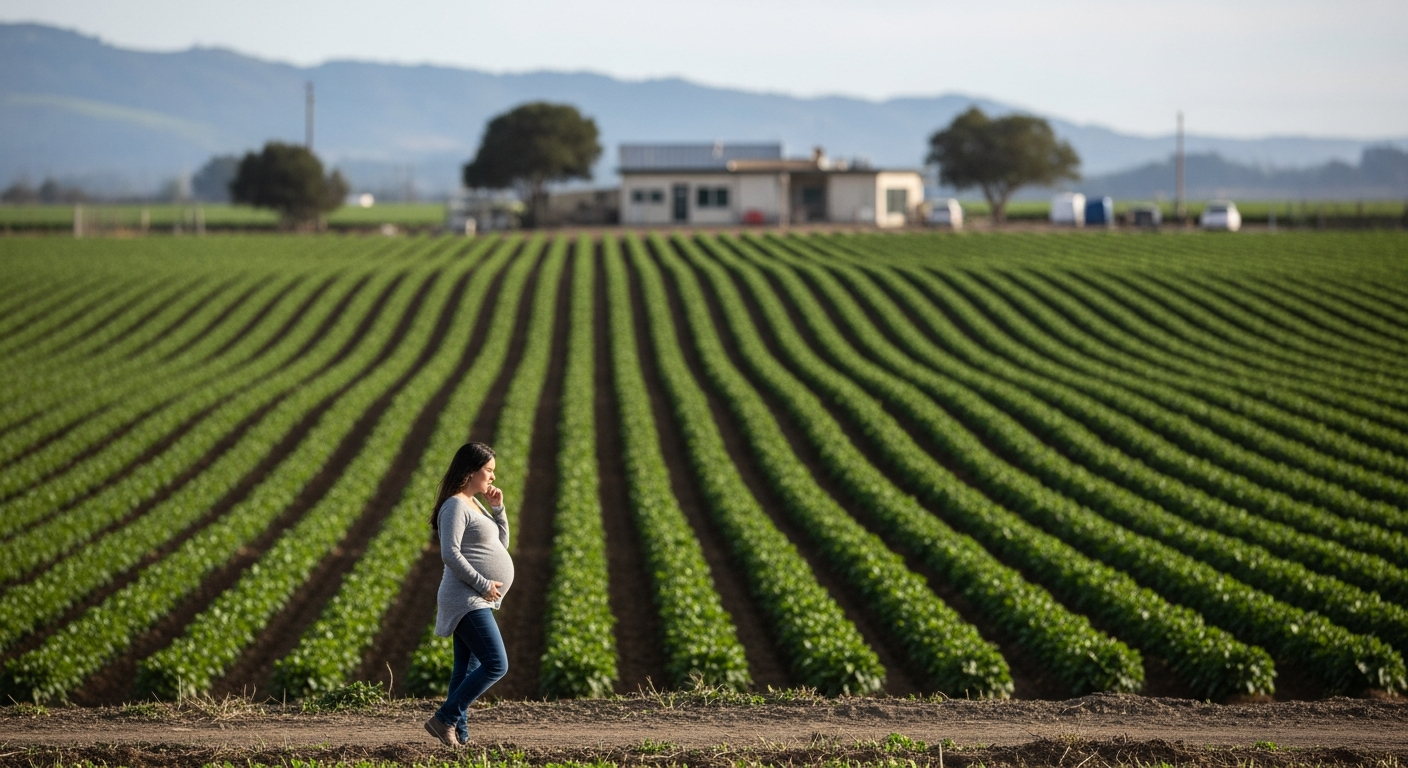
Half of Monterey County Pregnancies Occur Near Pesticide-Treated Fields, Study Finds
In Monterey County, California, more than one in two pregnancies occurs within a kilometer of agricultural fields treated with organophosphate pesticides. These are the same chemicals that have been repeatedly linked to neurodevelopmental harm in children exposed before birth.
The Study
A population-level study published in BMC Public Health analyzed 2021 birth records across California alongside agricultural pesticide application data. Researchers calculated the proximity of every birth address in the state to fields where organophosphate pesticides had been applied during the pregnancy period.
The statewide figure is already concerning: 7.5 percent of all pregnant people in California who gave birth in 2021 lived within one kilometer of agricultural fields where organophosphates had been used during their pregnancy. But the regional numbers are far more alarming.
In Monterey County, the epicenter of California's agricultural industry, over half of all pregnancies fell within that one-kilometer radius. Santa Cruz County ranked fourth in the state, with 29 percent of births coming from people who lived near treated fields. These are not remote farmlands, but communities where families live, work, and raise children alongside intensive agriculture.
Who Bears the Burden
The study documented "considerable disparities" by ethnicity, age, and region. Hispanic teenagers on California's Central Coast were the most likely to live near organophosphate-treated fields during their pregnancies. The crops driving this exposure include strawberries, lettuce, broccoli, and other vegetables that define the region's agricultural economy.
This pattern reflects a longstanding environmental justice issue. Agricultural communities in the Central Valley and Central Coast are predominantly Latino, and the workers who tend these fields and live in adjacent housing face chemical exposures that wealthier, more distant communities do not.
The demographics of exposure are not accidental. Housing availability, economic constraints, and proximity to agricultural employment concentrate vulnerable populations in areas with the highest pesticide use.
How Organophosphates Affect Pregnancies
Organophosphate pesticides work by disrupting the nervous system in insects. The same mechanism poses risks to developing human brains. When these chemicals are sprayed on fields, they do not stay in place. Organophosphate gases can drift across a valley and remain suspended in the air for up to 72 hours.
Repeated studies have linked prenatal organophosphate exposure to neurodevelopmental harm in children. The documented effects include poorer cognitive functioning, behavioral problems, attention deficit hyperactivity disorder (ADHD), reduced IQ scores, and delayed motor development. These outcomes have been observed even at exposure levels below regulatory thresholds.
For pregnant women living within a kilometer of treated fields, the exposure is not a single event. It is chronic, recurring with each pesticide application throughout the growing season, often multiple times during a pregnancy.
The Chlorpyrifos Ban and Its Limits
The study also tracked temporal trends in organophosphate use before and after California's ban on chlorpyrifos, one of the most widely used organophosphates. While chlorpyrifos applications declined following the ban, other organophosphate chemicals continued to be applied at similar or increased rates.
This substitution effect is a recurring pattern in pesticide regulation. When one chemical is restricted, agricultural operations often shift to closely related compounds that may carry similar risks but have not yet faced the same regulatory scrutiny. The total burden of organophosphate exposure on nearby communities may not decrease as expected when individual chemicals are banned.
What Needs to Change
Public health advocates have called for several protective measures: mandatory buffer zones between agricultural spraying and residential areas, drift reduction technology requirements, advance notification systems that alert nearby residents before pesticide applications, and expanded support for organic farming practices that eliminate synthetic pesticide use altogether.
California's Department of Pesticide Regulation has authority to implement stronger protections, but agricultural economic interests and regulatory inertia have slowed progress. Meanwhile, every growing season brings renewed exposure to the communities living closest to the fields.
The food on American tables arrives through supply chains that begin in these fields. Understanding the human cost of conventional agriculture is part of understanding the full picture of food safety.
Sources
- BMC Public Health - "Temporal trends of agricultural organophosphate pesticide use in California and proximity to pregnant people in 2021" - September 2025. https://bmcpublichealth.biomedcentral.com/articles/10.1186/s12889-025-23939-y
- Inside Climate News - "California Sanctions Stark Disparities in Pesticide Exposure During Pregnancy" - October 1, 2025. https://insideclimatenews.org/news/01102025/california-pregnancy-pesticide-exposure-agricultural-fields/
- Santa Cruz Local - "New study finds 29% of Santa Cruz County pregnancies near harmful pesticides" - October 1, 2025. https://santacruzlocal.org/2025/10/01/new-study-finds-29-of-santa-cruz-county-pregnancies-near-harmful-pesticides/
- Beyond Pesticides - "Organophosphate Pesticide Drift from Agricultural Fields Elevates Risk for Pregnant Farmworkers" - October 2025. https://beyondpesticides.org/dailynewsblog/2025/10/organophosphate-pesticide-drift-from-agricultural-fields-elevates-risk-for-pregnant-farmworkers/
- Mercury News - "Santa Cruz County ranks 4th in pesticide proximity to pregnant residents" - October 1, 2025. https://www.mercurynews.com/2025/10/01/study-santa-cruz-county-ranks-4th-in-pesticide-proximity-to-pregnant-residents/