FDA Kills 35 PFAS Food Packaging Uses While Study Exposes Drug-to-Tap Pipeline
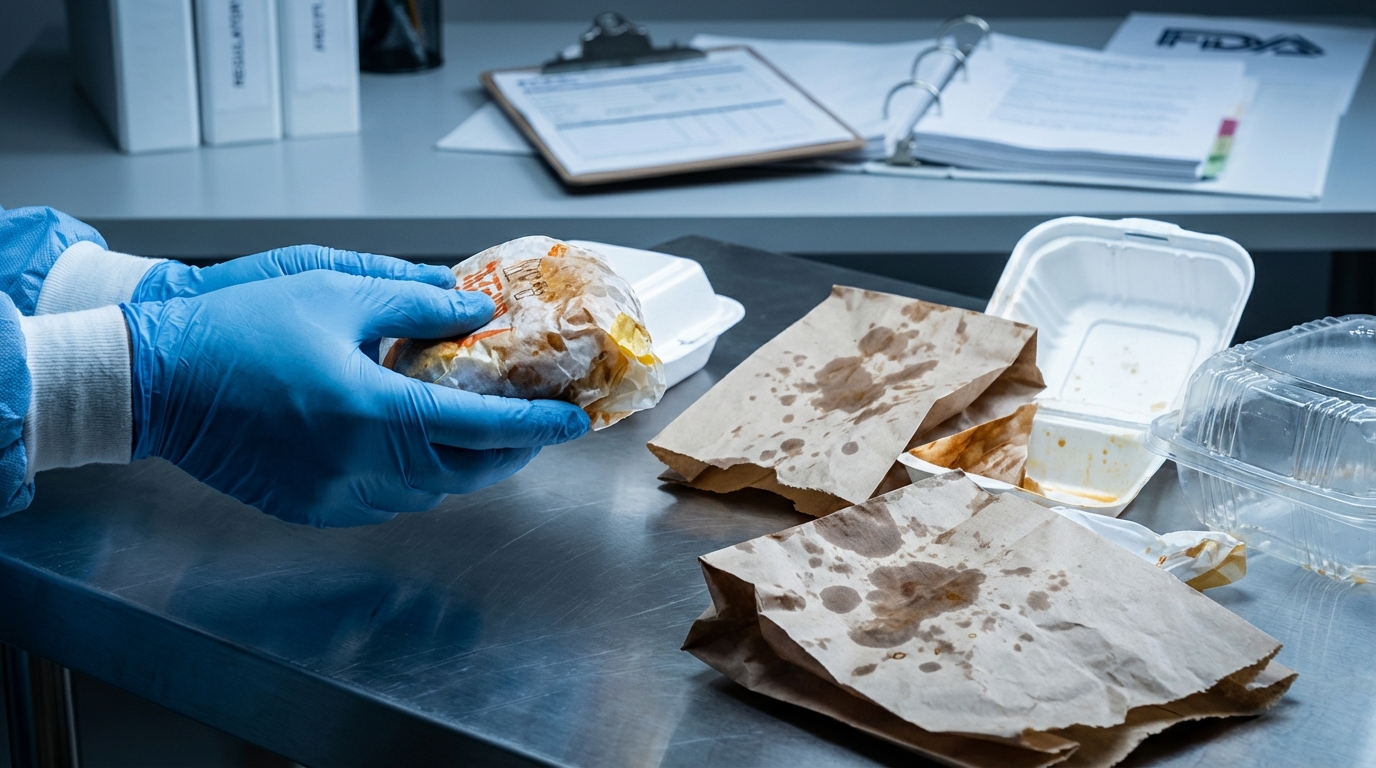
On January 6, 2025, the FDA pulled authorization for 35 uses of PFAS-based grease-proofing coatings in food packaging. Fast-food wrappers, microwave popcorn bags, take-out containers, and pet food bags that relied on these "forever chemicals" to repel grease are now barred from using them.
That same day, a study published in the Proceedings of the National Academy of Sciences (PNAS) dropped a second bombshell: prescription drugs are the dominant source of PFAS contamination in American wastewater. Not factories. Not firefighting foam. Medications that millions of Americans take every day.
The two developments, taken together, reveal a deep contradiction in PFAS regulation. The government is closing one door on forever chemicals in food packaging while scientists have discovered a far larger, almost entirely unregulated pathway into the water supply.
The FDA's PFAS Packaging Purge
The FDA's January 6 action, published in the Federal Register, formally determined that 35 food-contact notifications (FCNs) for PFAS grease-proofing coatings "are no longer effective." Manufacturers can no longer legally use these specific PFAS formulations in materials that touch food.
The affected products span everyday packaging: grease-resistant paper and paperboard used in fast-food wrappers, microwave popcorn bags, bakery bags, take-out containers, and pet food bags. These coatings prevented oil and moisture from soaking through paper packaging, a function that made PFAS attractive to the food industry for decades.
According to the FDA, this action "eliminates the primary source of dietary exposure to PFAS from authorized food contact uses."
The revocation is, in one sense, a formality. By February 2024, the FDA had already announced that "all grease-proofing substances containing PFAS are no longer being sold by manufacturers for food contact use in the U.S. market." Industry's voluntary phase-out preceded the regulatory hammer. But the January 6 action makes it legally binding, with a compliance deadline of June 30, 2025 for any remaining stock still in commerce.
The FDA did not act alone. Oregon and Rhode Island enacted state-level bans on PFAS in paper food packaging that took effect on January 1, 2025, just days before the federal action. In total, 20 states now ban PFAS in paper food packaging, a regulatory shift that has accelerated sharply over the past two years.
The Basics on PFAS
PFAS (per- and polyfluoroalkyl substances) are a family of roughly 15,000 synthetic chemicals built around carbon-fluorine bonds, one of the strongest bonds in organic chemistry. That bond is what makes them useful: PFAS repel water, oil, and heat. It is also what makes them dangerous. The same chemical stability that keeps grease off a burger wrapper means PFAS do not break down in the environment, or in the human body, for years or decades.
The Environmental Protection Agency has linked PFAS exposure to "deadly cancers, impacts to the liver and heart, and immune and developmental damage to infants and children." According to CDC data, 97% of Americans already have detectable levels of PFAS in their blood.
The FDA's packaging revocation targets one known exposure route. But the PNAS study published the same day suggests the problem is far bigger than packaging ever was.
The Drug Pipeline: A PFAS Source Hiding in Plain Sight
A research team led by Bridger Ruyle, who conducted the study at Harvard and is now an incoming assistant professor at NYU Tandon School of Engineering, examined wastewater at publicly owned treatment works (POTWs) across the United States. The eight facilities they studied were representative of the type serving roughly 70% of the U.S. population. What they found upended assumptions about where PFAS in water actually comes from.
Seventy-five percent of the organic fluorine detected in wastewater came from pharmaceutical compounds. Not from industrial discharge. Not from products like food packaging. From drugs.
The study identified four polyfluorinated medications as key contributors: celecoxib (sold as Celebrex, for arthritis pain), flecainide (sold as Tambocor, for heart arrhythmias), maraviroc (sold as Selzentry, for HIV), and sitagliptin (sold as Januvia, for type 2 diabetes). Each contains multiple fluorine atoms in its molecular structure. When patients take them, the drugs pass through the body and enter the wastewater system through urine and feces.
"We've been focused on a small subset of these chemicals, but that's just the tip of the iceberg," Ruyle told NYU Tandon.
The numbers are stark. About 20% of all modern pharmaceuticals now contain fluorine, which, according to NYU Tandon, "enhances drug effectiveness by increasing persistence in the body, but this same property prevents environmental breakdown." The same chemical trait that makes a drug effective also makes it a forever chemical.
Wastewater Treatment Cannot Remove Them
One of the most alarming findings in the PNAS study: current wastewater treatment barely touches pharmaceutical PFAS. Sixty-two percent of the organic fluorine from drugs remained in treated effluent, the water that treatment plants release back into rivers and lakes. Even facilities using advanced treatment methods (ozonation, activated carbon filtration, ultrafiltration) removed less than 25% of pharmaceutical organofluorine.
That treated water often becomes someone else's drinking water. According to The New Lede, roughly 50% of U.S. drinking water utilities draw from sources downstream of wastewater discharge points. Under normal conditions, an estimated 15 million Americans receive drinking water affected by this pharmaceutical PFAS pathway. During drought, when river flows drop and wastewater effluent makes up a larger share of the water, that number swells to 23 million.
"We don't yet understand the public health implications of long-term exposure to these compounds through drinking water," Ruyle told Newsweek.
The gap between what regulators are watching and what is actually in the water is enormous. The six PFAS compounds currently regulated by the EPA account for only 7 to 8% of the total organofluorine detected in wastewater. The other 92% is a largely unmonitored mix of pharmaceutical breakdown products and other fluorinated compounds that standard testing does not even look for.
Two Stories, One Problem
The FDA's food packaging action and the PNAS wastewater study are two faces of the same challenge. Regulators are playing whack-a-mole with a chemical family that numbers 15,000 compounds and infiltrates American life through channels most people have never considered.
The packaging ban is real progress. Removing PFAS from food wrappers eliminates a direct, daily source of exposure for millions of people. But the PNAS findings suggest that even as one pathway closes, a far larger one remains wide open. Every time someone fills a prescription for a fluorinated drug, trace amounts of PFAS eventually flow through the sewer system, through a treatment plant that cannot adequately remove them, and into the water supply of communities downstream.
The regulatory mismatch is striking. The FDA spent years pressuring the food packaging industry to phase out 35 specific PFAS formulations, then memorialized that phase-out in a Federal Register notice. The pharmaceutical industry, meanwhile, continues to design and prescribe fluorinated drugs with no similar scrutiny of their environmental fate. The PNAS study is the first to quantify this pharmaceutical contribution at a national scale.
How to Reduce Your Exposure
The FDA's packaging action is good news, but it does not mean your food is PFAS-free. Contamination comes from multiple sources: water, soil, and food grown in contaminated areas. A few practical steps can make a difference.
Watch your packaging. The PFAS grease-proofing phase-out is underway, but existing stock can remain in commerce until June 30, 2025. Avoid microwaving food in paper packaging. Transfer take-out food to glass or ceramic containers when possible.
Check your water. If your drinking water utility is downstream of a wastewater treatment plant, consider having your water independently tested or using a reverse-osmosis filter. Reverse osmosis is one of the few methods shown to reduce PFAS levels effectively.
Know your medications. This does not mean stopping prescribed drugs. The PNAS study identified a systemic problem, not an individual one. But it is worth knowing that fluorinated pharmaceuticals contribute to environmental PFAS. Consumers can ask pharmacists about alternative formulations when options exist.
Look beyond the label. Terms like "PFAS-free" on food packaging refer only to the packaging itself. They say nothing about whether the food inside was grown in contaminated soil or processed with contaminated water. VeriFoods lets consumers scan product barcodes and check whether items have been independently tested for contaminants like PFAS, heavy metals, and pesticides, adding a layer of transparency that packaging labels alone cannot provide.
The Bigger Picture
January 6, 2025 was a day of sharp contrasts for PFAS. The FDA closed the book on 35 food-packaging uses of forever chemicals, capping years of industry pressure and voluntary phase-outs. On the same day, scientists revealed that the drugs Americans take for arthritis, heart conditions, diabetes, and HIV are pumping PFAS into the water supply at levels that dwarf what food packaging ever contributed.
The packaging ban matters. But the PNAS study makes clear that PFAS contamination is not a single-source problem. These chemicals are embedded in modern life, from the pills in your medicine cabinet to the water coming out of your tap. Addressing one source while ignoring others does not make the problem go away. It makes it harder to see.
Sources
FDA.gov. "FDA Determines Authorization of 35 Food Contact Notifications Related to PFAS Are No Longer Effective." January 3, 2025. https://www.fda.gov/food/hfp-constituent-updates/fda-determines-authorization-35-food-contact-notifications-related-pfas-are-no-longer-effective
FDA.gov. "FDA Announces PFAS Used as Grease-Proofing Agents in Food Packaging No Longer Being Sold in the U.S." February 28, 2024. https://www.fda.gov/food/hfp-constituent-updates/fda-announces-pfas-used-grease-proofing-agents-food-packaging-no-longer-being-sold-us
Federal Register. "Food Contact Notifications That Are No Longer Effective." January 6, 2025. https://www.federalregister.gov/documents/2025/01/06/2024-31692/food-contact-notifications-that-are-no-longer-effective
Proceedings of the National Academy of Sciences (PNAS). "Polyfluorinated pharmaceuticals as a previously unrecognized source of per- and polyfluoroalkyl substances (PFAS) in wastewater." January 6, 2025. DOI: 10.1073/pnas.2417156122. https://www.pnas.org/doi/10.1073/pnas.2417156122
NYU Tandon School of Engineering. "Forever chemicals in wastewater far more widespread than previously known." January 6, 2025. https://engineering.nyu.edu/news/forever-chemicals-wastewater-far-more-widespread-previously-known-new-multi-university-study
The New Lede. "Fluorinated drugs are PFAS contaminating US drinking water." January 6, 2025. https://www.thenewlede.org/2025/01/fluorinated-drugs-pfas-contaminating-us-drinking-water/
Newsweek. "Forever Chemicals Found in Drinking Water Linked to Common Pharmaceuticals." January 7, 2025. https://www.newsweek.com/forever-chemicals-pfas-drinking-water-wastewater-pharmaceuticals-2010964
Related Articles

PFAS in Beer: What Every Pint Lover Should Know Now
By VeriFoods PFAS in Your Pint: What Beer Drinkers Need to Know Beer is often associated with relaxation and social...

EWG Proposes PFAS Standards That Fully Protect Children’s Health
In the almost 20 years since water pollution with toxic fluorinated chemicals, or PFAS, erupted as a public health...

These Four Foods Are High In Pesticides – Try Organic To Reduce Your Exposure
Since 2004, EWG’s Shopper’s Guide to Pesticides in Produce™ has helped Americans choose the fruits and vegetables that...