Studies Link Common Food Dyes to ADHD, Preservatives to Cancer Risk
A study of 105,260 people tracked over seven and a half years found that common food preservatives are associated with a measurably higher risk of developing cancer. Potassium sorbate, one of the most widely used preservatives in packaged foods, was linked to a 14% increase in overall cancer risk and a 26% increase in breast cancer risk. Sodium nitrite, the curing agent in bacon, hot dogs, and deli meats, was associated with a 32% increase in prostate cancer risk.
Those findings, published by BMJ Group, landed alongside a separate body of research showing that synthetic food dyes still permitted in the U.S. contribute to hyperactivity, inattention, and irritability in children. The evidence points to a conclusion most consumers would find uncomfortable: FDA-approved does not mean safe.
The Preservative-Cancer Connection
The BMJ study drew on data from France's NutriNet-Sante cohort, one of the largest ongoing nutritional research projects in the world. Researchers tracked 105,260 participants over a median follow-up of 7.5 years. During that period, 4,226 cancer cases were recorded.
The results were specific. Higher intake of potassium sorbate (labeled E202 on European packaging, or simply "potassium sorbate" in the U.S.) correlated with a 14% higher overall cancer risk. For breast cancer, the association jumped to 26%. Sodium nitrite (E250), the preservative that keeps processed meats pink, was linked to a 32% increase in prostate cancer risk. Sodium metabisulfite and potassium metabisulfite, preservatives commonly found in wine, dried fruit, and packaged seafood, carried a 12% increased risk.
These are not obscure industrial chemicals. Potassium sorbate appears in cheese, baked goods, yogurt, and dried fruit. Sodium nitrite is in virtually every package of bacon, ham, sausage, and deli turkey sold in the United States. Most American consumers encounter these preservatives daily, often several times before lunch.
The study's authors called for a re-evaluation of preservative regulations to improve consumer protection. A 105,000-person cohort tracked for nearly eight years is not a preliminary signal. It is a large-scale, long-duration study published in one of the world's most respected medical journals.
Synthetic Dyes and Children's Behavior
While the preservative research focused on cancer, a parallel line of evidence has been building around synthetic food dyes and children's neurological health.
Artificial food colorings, including Red 40, Yellow 5, Yellow 6, Blue 1, and Blue 2, have been linked to hyperactivity, inattention, and irritability in children across multiple peer-reviewed studies. According to Healthbeat, roughly 10% of behavioral differences in children with ADHD are attributable to synthetic dyes, a figure drawn from a 2012 study published in the Journal of the American Academy of Child & Adolescent Psychiatry.
The evidence is not new. A 2007 University of Southampton study published in The Lancet tested the effects of artificial dyes and the preservative sodium benzoate on children. All children in the study, including those not previously identified as sensitive to dyes, showed increased hyperactivity when consuming the additives.
A 2021 meta-analysis by California's Office of Environmental Health Hazard Assessment reviewed the accumulated research and concluded that synthetic dyes pose a real risk to children's behavior. That assessment helped drive California's decision to ban six synthetic dyes from school meals.
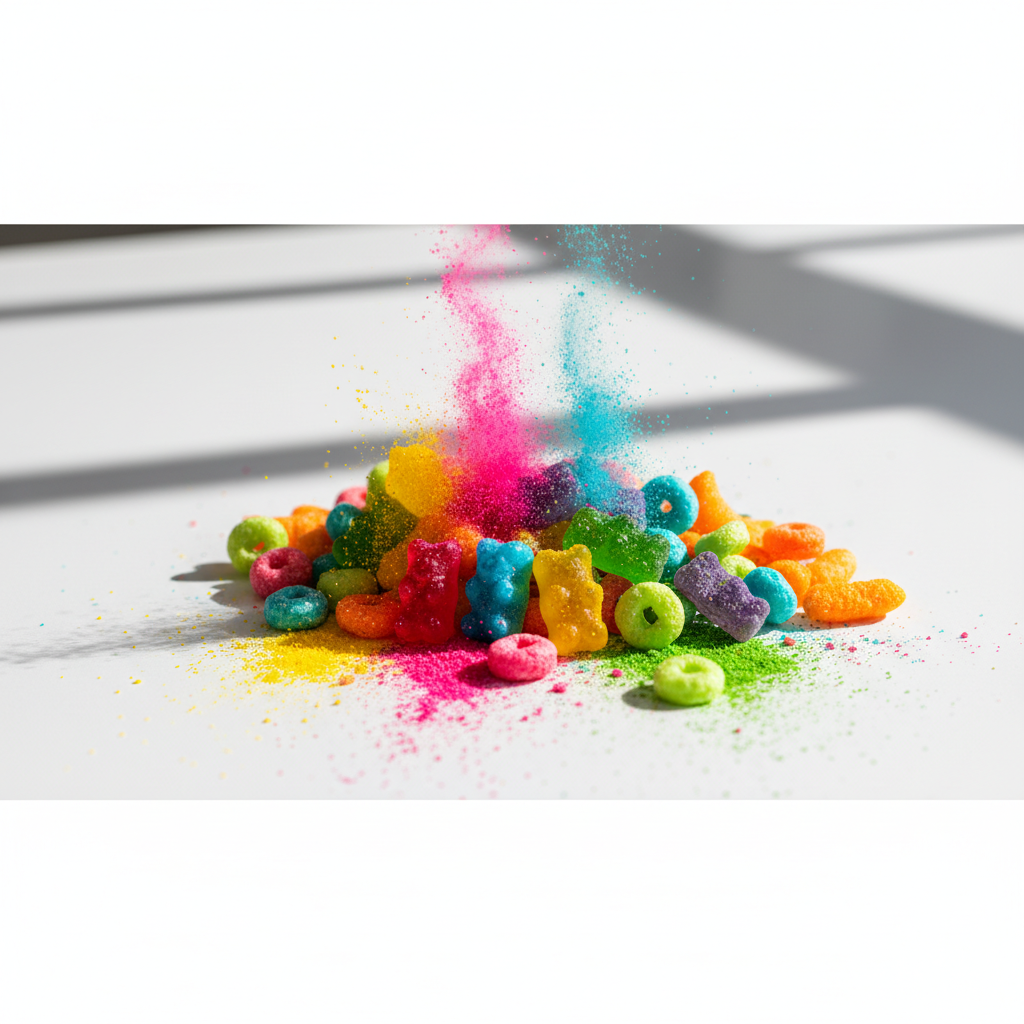
Despite this research, Red 40, Yellow 5, Yellow 6, Blue 1, and Blue 2 remain legal in thousands of American food products. These dyes serve no nutritional purpose. They exist to make food brighter and more appealing to children, the population most vulnerable to their effects.
The FDA and HHS have directed manufacturers to phase out synthetic dyes by 2026. Major companies like Kraft Heinz and General Mills have already begun reformulating. But until the phase-out is complete, these dyes remain in cereal, sports drinks, gummy snacks, and countless other products.
Congress Moves to Force FDA Action on 18 Chemicals
The research momentum has reached Capitol Hill. In July 2025, the Food Chemical Reassessment Act was reintroduced in the House of Representatives, targeting 18 specific chemicals for immediate FDA re-evaluation.
The list includes names familiar to anyone tracking food safety: TBHQ, titanium dioxide, BHA, BHT, sodium benzoate, sodium nitrite, and several artificial dyes. These are not theoretical concerns. The National Toxicology Program already lists BHA as "reasonably anticipated to be a human carcinogen." Titanium dioxide, still approved for food use in the U.S., has been banned in Europe over concerns that it may damage DNA.
That regulatory gap between the U.S. and Europe is not a technicality. European regulators evaluated the same evidence and decided titanium dioxide was too risky to allow in food. American regulators looked at similar data and kept it on the approved list. The Food Chemical Reassessment Act would force the FDA to revisit those decisions using current science.
The FDA has taken some initial steps. The agency launched a full reassessment of BHA in May 2025, months before the bill's reintroduction. But the legislation's sponsors clearly believe voluntary agency action is not happening fast enough. When a preservative is tied to a 32% increase in prostate cancer risk and food colorings are tied to behavioral changes in children, waiting for the FDA to act on its own timeline is a gamble that falls on consumers.
The Regulatory Gap Is the Story
The BMJ preservative study, the accumulated dye research, and the congressional push all converge on a single problem: the system that is supposed to protect Americans from harmful food chemicals is not keeping pace with the science.
The FDA approved these additives years or decades ago based on the data available at the time. That data has changed. A 105,000-person study linking potassium sorbate to breast cancer did not exist when the FDA first approved the preservative. The Southampton study showing that food dyes affect all children, not just sensitive ones, came after decades of these dyes already being in the food supply.
The European Union has responded to updated evidence by banning or restricting chemicals that the U.S. still permits. That divergence is a regulatory choice, not a scientific disagreement. The research is available to both sides. One acted on it. The other has not.
What This Means for Your Family
Reading ingredient labels is the most direct action available right now.
For preservatives, look for potassium sorbate in cheese, yogurt, baked goods, and dried fruit. Check for sodium nitrite in any processed or cured meat: bacon, ham, sausages, deli slices. Sodium metabisulfite and potassium metabisulfite appear in wine, dried fruit, and some shellfish products.
For synthetic dyes, the names are straightforward: Red 40, Yellow 5, Yellow 6, Blue 1, Blue 2. They show up most often in candy, cereal, snack foods, flavored beverages, and products marketed to children. Companies that have already reformulated use natural colorants like beet juice, turmeric, and paprika extract.
Apps like VeriFoods can flag these additives in products before you buy them. When ingredient lists run 30 lines long with chemical names most people don't recognize, having a tool that identifies the specific chemicals linked to health risks saves real time at the grocery store.
The FDA is moving in the right direction with its 2026 dye phase-out timeline and its BHA reassessment. Congress is pushing harder with the Food Chemical Reassessment Act. But the research linking these additives to cancer and behavioral problems in children exists now. Waiting for regulators to finish means consuming chemicals that the science has already flagged.
Sources
- Healthbeat (UPMC) - "Many American foods still contain dyes linked to hyperactivity in kids. Parents want them banned." - July 14, 2025. https://www.healthbeat.org/newyork/2025/07/14/food-dyes-hyperactivity-rfk-jr-kids/
- BMJ Group - "Higher intake of food preservatives linked to increased cancer risk" - January 8, 2026. https://bmjgroup.com/higher-intake-of-food-preservatives-linked-to-increased-cancer-risk/
- Environmental Working Group - "EWG lauds reintroduction of House food chemical safety review bill" - July 10, 2025. https://www.ewg.org/news-insights/news-release/2025/07/ewg-lauds-reintroduction-house-food-chemical-safety-review-bill