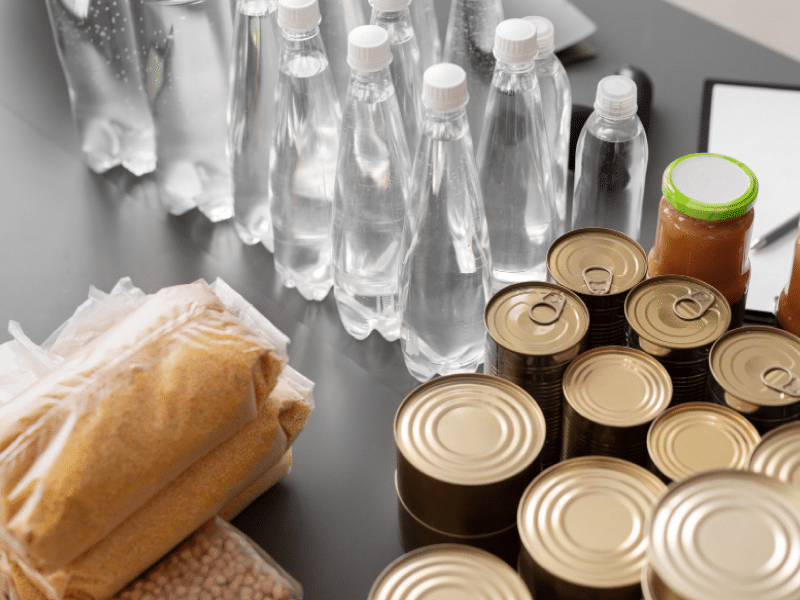
UK Proposes Sweeping Ban on BPA in Food Packaging for Safer Eating
By VeriFoods
The UK is considering a significant move to protect public health by proposing a ban on Bisphenol A (BPA) and related chemicals in food packaging and other food contact materials. The Food Standards Agency (FSA) has opened a public consultation, inviting feedback on this proposal until December 24, 2025. This step would bring the UK in line with recent European Union regulations, which have already moved to restrict BPA and its analogues.
Why is BPA under scrutiny?
BPA is a chemical commonly used in plastics and resins that come into contact with food, such as water bottles, can linings, and food containers. Over the years, scientific studies have raised concerns about BPA's potential health risks, particularly its ability to disrupt hormones (endocrine disruption) and its possible link to reproductive toxicity.
While some regulatory bodies and industry representatives argue that BPA exposure from food packaging is within safe limits, at VeriFoods, we advocate for a precautionary approach. We believe that food should be as close to its natural state as possible, as the long-term effects of synthetic chemicals like BPA and its analogues are not fully understood.
What are the policy options?
The FSA is considering three main approaches:
- Policy Option 1: Continue allowing BPA and its analogues in food contact materials, maintaining the current situation.
- Policy Option 2: Ban BPA but allow structurally similar chemicals, such as Bisphenol S (BPS) and Bisphenol F (BPF), to remain in use.
- Policy Option 3: Ban BPA and all structurally similar analogues in food contact materials.
The agency strongly favors Policy Option 3, which would provide the highest level of protection for consumers by removing not just BPA but also its close chemical relatives from food packaging. This approach is rooted in the precautionary principle, which prioritizes consumer safety even in the face of scientific uncertainty. It would also harmonize UK regulations with those of the EU and Canada, supporting safer global food trade.
Beyond BPA: The Hidden Risk of “BPA-Free” Labels
At VeriFoods, we go far beyond simple BPA testing. Our lab protocols screen for 15 distinct bisphenol analytes, including BPS, BPF, BPAF, BPB, and others that are commonly used as BPA substitutes.
This expanded testing is crucial because many manufacturers that advertise their products as “BPA-free” have simply replaced BPA with other bisphenols that share nearly identical endocrine-disrupting properties but are less regulated and less recognized by the public.
In other words, “BPA-free” does not necessarily mean bisphenol-free or safe. Chemically, most of these analogues still bind to estrogen receptors and can interfere with hormonal balance. Early toxicological studies suggest that several of these substitutes—particularly Bisphenol S (BPS) and Bisphenol F (BPF)—may have equal or even greater biological potency than BPA itself.
By expanding our testing to include this full bisphenol family, VeriFoods helps uncover the hidden chemical substitutions that are often invisible to consumers. This ensures that when a product earns a clean rating in our database, it reflects true transparency—not a loophole in labeling.
Will this change make a difference?
If the UK adopts Policy Option 3, the ban would be rolled out in phases, giving manufacturers time to adapt:
- By July 20, 2026: Ban on single-use food contact materials made with BPA.
- By January 20, 2028: Ban on single-use materials used to preserve fruits, vegetables, or fishery products, and on BPA-based coatings applied only to the exterior of metal surfaces.
- By January 20, 2029: Ban on repeat-use food contact materials made with BPA, including equipment used in food production.
There are a few narrowly defined exceptions. For instance, BPA may still be used in certain filtration systems where alternatives are not yet practical, but only if migration into food is undetectable and strict cleaning protocols are followed. Similarly, BPA may be allowed in coatings for very large industrial tanks if replacement would be prohibitively difficult.
What does this mean for health-conscious consumers?
For those who prioritize natural, minimally processed foods, this proposal is a step in the right direction. BPA and its analogues are synthetic chemicals with potential health risks that are still being studied. By eliminating these substances from food packaging, the UK would be reducing a source of unnecessary chemical exposure in the food supply.
At VeriFoods, we support this move and remain committed to testing beyond BPA—screening for the entire spectrum of bisphenols that could pose endocrine or reproductive risks. We encourage consumers to remain vigilant about the materials that come into contact with their food and to seek full transparency rather than relying on limited “BPA-free” claims.
💬 Does your family regularly use canned foods or plastic food containers?
Share your thoughts on this proposed ban in the comments below!
References
- Food Safety Magazine Editorial Team. "UK Proposes to Ban BPA, Other Bisphenols in Food Contact Materials." October 2, 2025.
- European Union Regulation on BPA and analogues in food contact materials, December 2024.
- Rochester, J.R., & Bolden, A.L. Bisphenol S and F: A Systematic Review and Comparison of the Hormonal Activity of BPA Substitutes. Environmental Health Perspectives, 2015.
- VeriFoods Internal Testing Database (2025). Screening protocol for bisphenol analogues (BPA, BPS, BPF, BPAF, BPB, etc.).
Related Articles
Europe Banned BPA From Food Packaging. The FDA Has Done Nothing for 1,320 Days.
On January 20, 2025, the European Union banned bisphenol A from all food contact materials. Metal can coatings,...

The EU Banned BPA From All Food Packaging. The FDA Missed Its Deadline by 1,000 Days.
On January 20, 2025, the European Union banned bisphenol A from every category of food contact material. Metal can...
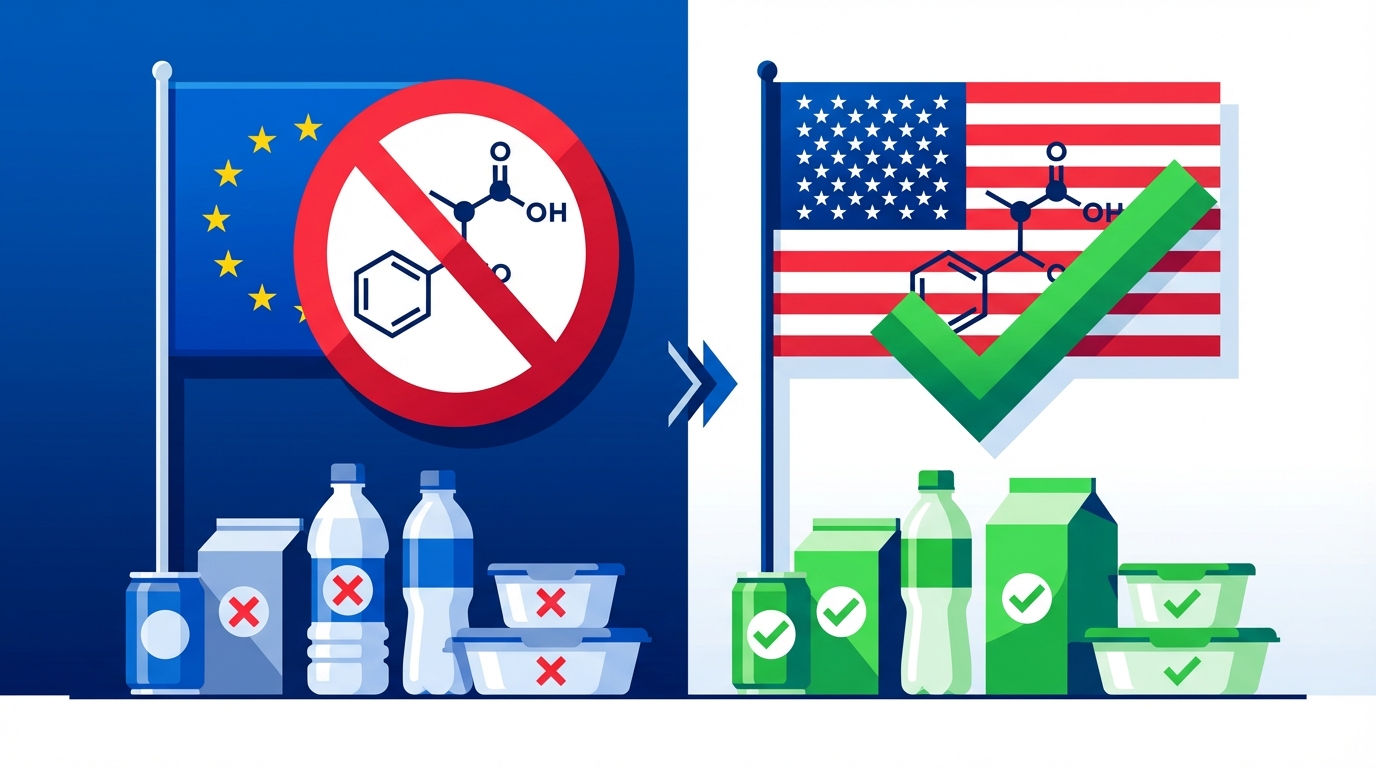
EU Bans BPA in All Food Packaging While FDA Calls It 'Safe'
On January 20, 2025, the EU banned BPA and other bisphenols from all food packaging after concluding the safe daily...