Study: Americans Swallow 60,000 Microplastic Particles Daily, Mostly from Vegetables and Grains
The average American adult swallows nearly 60,000 microplastic particles every single day. That is the conclusion of a new analysis from the University of Amsterdam, published in Nature Medicine in January 2026. But the real shock is not the number itself. It is where the plastic is coming from: not fish, not shellfish, but vegetables, grains, and meat, the staples that fill most American plates at every meal.
Context
For years, public concern about microplastics in food centered almost entirely on seafood. Photos of plastic-choked oceans, dead seabirds, contaminated tuna. That framing made sense given early research. But it left a blind spot. Bread, pasta, salads, chicken: the foods Americans eat three times a day were rarely tested with the same rigor.
The University of Amsterdam study aimed to close that gap. Researchers reviewed 193 published papers covering microplastic contamination across 13 distinct food categories, making it one of the most thorough dietary assessments of its kind. The findings challenge a core assumption: that cutting back on seafood meaningfully lowers your microplastic exposure. It does not.
The Findings
Roughly 60,000 microplastic particles per day. That figure accounts for contamination across all 13 food categories the researchers analyzed. Vegetables and grains ranked at the top, followed by meat. Seafood, long treated as the face of microplastic contamination, contributed a smaller share of daily intake than any of those three categories.
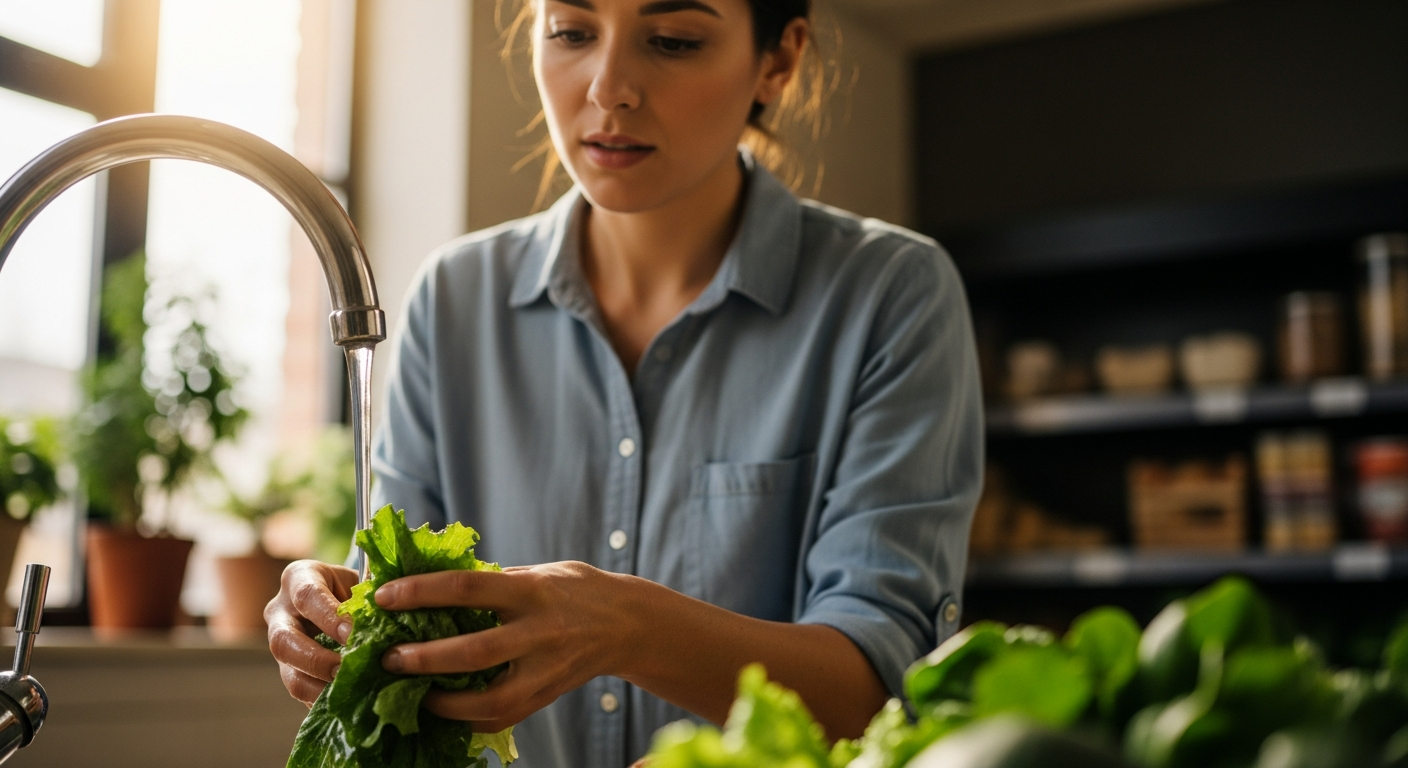
The primary contamination pathway runs through agricultural soil. Plastic mulch film, widely used in commercial farming to suppress weeds and retain moisture, breaks down into microplastic fragments that embed in the soil. Wastewater biosolids, commonly applied as fertilizer, carry additional microplastic loads. Contaminated irrigation water adds a third route. Crops grown in this soil absorb microplastic particles through their root systems, and those particles end up in the harvested food.
This means a plate of roasted vegetables or a bowl of rice may carry a microplastic load that rivals or exceeds a serving of salmon. The study's scope, drawing on 193 papers, gives the finding unusual statistical weight. Prior estimates of daily microplastic intake varied wildly because they relied on narrow datasets, often limited to one or two food types. By covering 13 categories simultaneously, the Amsterdam team produced what may be the most reliable daily intake estimate to date.
Grains present a particular concern because of how much of them Americans consume. Bread, cereal, pasta, and rice form the caloric backbone of most diets. If grain crops are consistently absorbing microplastics from contaminated soil, the cumulative daily exposure adds up fast, even from foods that appear wholesome and unprocessed.
What Experts Say
The Guardian's coverage of the study included commentary from independent scientists who called the shift in focus from seafood to staple crops a fundamental reframing of the microplastics problem. Agricultural soil contamination, they noted, has been underestimated as a vector for human exposure, partly because soil science and food safety research have historically operated as separate disciplines with little overlap (The Guardian, January 15, 2026).
The University of Amsterdam confirmed in its official press release that the 60,000-particle daily figure represents the study's central finding, and that the analysis was designed to capture the full dietary picture rather than isolating individual food types (University of Amsterdam, January 2026).
What This Means for You
Here is the uncomfortable reality: eating more vegetables and whole grains, the dietary advice every health guideline promotes, may also mean eating more microplastics. That is not a reason to stop eating produce or grains. It is a reason to pay attention to where your food comes from and how it was grown.
Knowing which food categories carry the highest microplastic risk matters. VeriFoods flags microplastics risk across product categories including grains, vegetables, and meat, not just seafood. Scanning a packaged grain product or a plant-based food shows microplastics risk data alongside other safety metrics. This study confirms what the app already covers: microplastics contamination is a whole-diet problem, not a seafood problem.
Until farming practices change, reducing exposure starts with knowing where the risk actually sits, product by product, meal by meal.
Stay ahead of the label.
Get early access to VeriFoods and be the first to see what's really in your food.
Sources
- Nature Medicine - "Peer-reviewed study on daily microplastic ingestion across 13 food categories" - January 2026. https://www.nature.com/articles/s41591-026-02876-9
- University of Amsterdam - "Microplastics daily intake study" - January 2026. https://www.uva.nl/en/content/news/press-releases/2026/01/microplastics-daily-intake-study.html
- The Guardian - "Americans ingest 60,000 microplastics daily, mostly from vegetables and grains, study finds" - January 15, 2026. https://www.theguardian.com/environment/2026/jan/15/americans-ingest-60000-microplastics-daily-vegetables-grains-study
Related Articles

The truth about nanoplastics in bottled water
There’s no doubt that water is one of the healthiest choices you can make. It keeps you hydrated without adding...

Your Food Packaging Is Shedding Microplastics Into Your Food—and It May Be Harming Your Metabolism
Every time you twist open a plastic water bottle, tear off a sheet of cling wrap, or steep a tea bag, you're likely...
Microplastics Rank Among Top 10 Predictors of Chronic Disease as Brain Levels Surge 50%
Researchers analyzed 154 socioeconomic and environmental factors to determine which best predicted chronic disease...