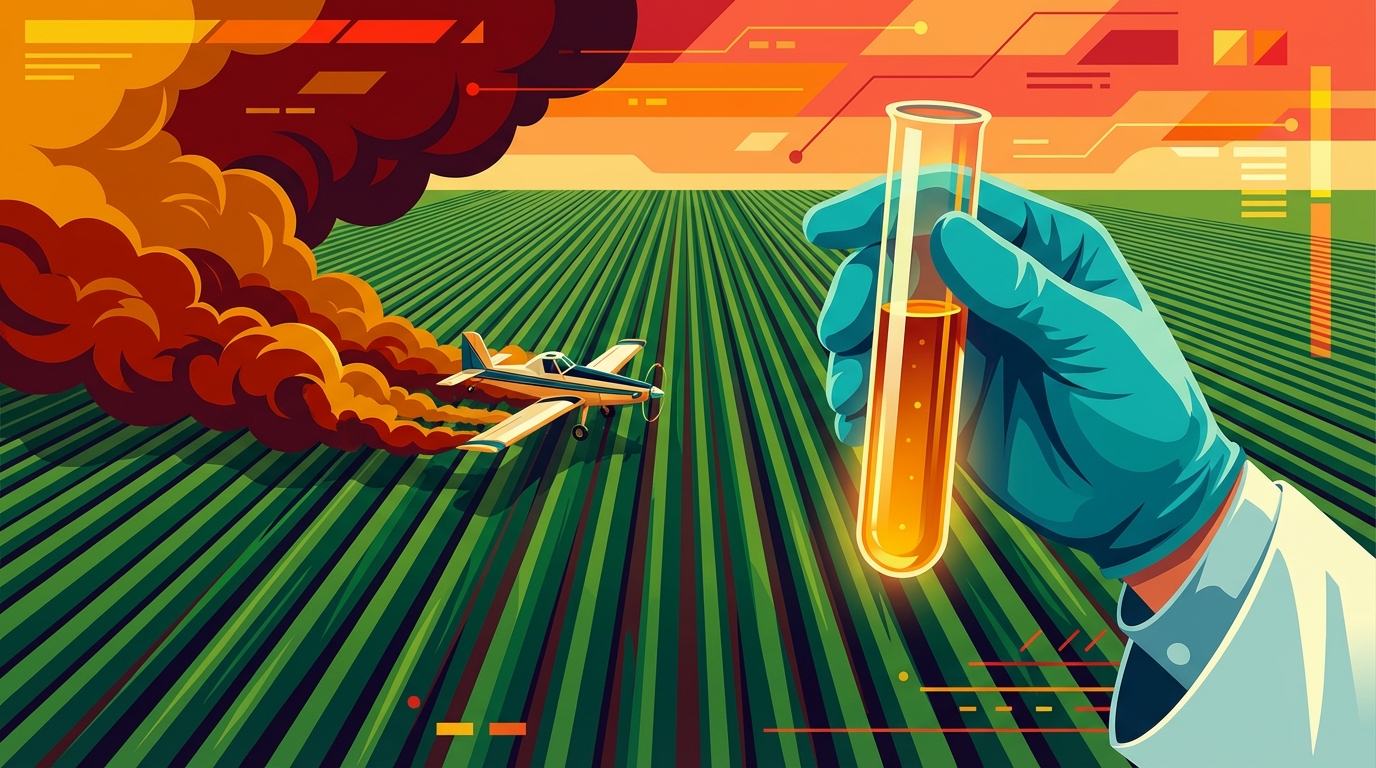
Georgia Jury Orders Bayer to Pay $2.1 Billion After Finding Monsanto Manipulated Roundup Science for Decades
John Barnes is a former Marine, a father, and a grandfather. For 20 years, he purchased Roundup weedkiller from Home Depot stores and used it around his home in Georgia. In 2020, he was diagnosed with non-Hodgkin lymphoma. He has undergone multiple rounds of treatment. The cancer has recurred at least once.
On March 21, 2025, a Georgia jury ordered Bayer AG -- the German pharmaceutical company that acquired Monsanto in 2018 -- to pay Barnes $2.1 billion. The verdict comprises $65 million in compensatory damages and $2 billion in punitive damages, according to PBS NewsHour via the Associated Press. It is the largest single-plaintiff injury verdict in Georgia history, according to DrugWatch.
The jury found that Monsanto deliberately manipulated scientific records for decades while possessing knowledge that glyphosate exposure could cause cancer, according to The New Lede.
"With this cancer ... there is no cure. Every day is worry, not just for me but my family," Barnes said during the trial, as reported by The New Lede.
The Scale of Roundup Litigation
Barnes is not alone. Over 177,000 people have filed lawsuits alleging that Roundup caused their cancer, according to PBS NewsHour. Bayer has set aside $16 billion to settle these claims.
Of those lawsuits, approximately 114,000 of 181,000 total claims have been resolved or deemed ineligible, according to The New Lede. Approximately 4,400 cases remain pending in federal court, with state-level trials continuing, according to DrugWatch.
The Barnes verdict was the fourth successful verdict for the plaintiff's legal team, according to PBS NewsHour. Bayer has won 17 of its last 25 Roundup-related trials, according to PBS NewsHour.
In January 2024, a Philadelphia jury awarded $2.25 billion in a separate Roundup case -- the largest prior single-plaintiff award. That verdict was subsequently reduced to $400 million on appeal, according to DrugWatch. Bayer has stated it plans to appeal the Barnes verdict, according to ABC7.
"We disagree with the jury's verdict, as it conflicts with the overwhelming weight of scientific evidence and the consensus of regulatory bodies," a Bayer spokesperson said, as quoted by PBS NewsHour.
What the Jury Found
The jury concluded that Monsanto deliberately manipulated scientific records for decades, according to The New Lede. That finding -- deliberate manipulation, not mere negligence -- is what drove the punitive damages to $2 billion. The ratio of punitive to compensatory damages (roughly 31 to 1) signals how severely this jury viewed Monsanto's conduct.
"The verdict shows the community is not going to tolerate these types of backroom dealings," said Kyle Findley, lead trial attorney for Barnes, as quoted by The New Lede.
A 2023 study by the National Institutes of Health identified cancer-related biomarkers in the urine of individuals exposed to glyphosate, according to The New Lede.
Bayer's stock dropped more than 8 percent on the Monday following the Friday verdict, according to The New Lede.
Bayer's Legislative Strategy
While fighting lawsuits in court, Bayer has pursued a parallel strategy in state legislatures. According to The New Lede, Bayer is the primary architect of Georgia legislation that would shield pesticide manufacturers from lawsuits.
This approach -- seeking legal protection through legislation rather than through the courts -- indicates the company's assessment of its litigation exposure. With $16 billion set aside for settlements and verdicts like the Barnes case continuing to mount, Bayer appears to be calculating that changing the law is more viable than winning every trial.
The $10 billion settlement Bayer agreed to in 2020 covered approximately 75 percent of active lawsuits at that time, according to DrugWatch. The total claim count now exceeds 177,000.
Glyphosate in the Food Supply
Glyphosate is the active ingredient in Roundup and the most widely used herbicide globally. While the Barnes case centered on home and garden use, glyphosate's reach extends far beyond backyard applications.
Glyphosate is commonly detected as a pesticide residue on food products, including grains, produce, and processed foods. It is one of the pesticide residues that VeriFoods tests for in its product analyses. The chemical's presence in food means that consumer exposure is not limited to people who spray it on their lawns.
The dual pathways of exposure -- direct application and dietary intake through food residues -- mean the Barnes verdict has implications beyond the gardening aisle. The jury's finding that Monsanto manipulated the science around glyphosate for decades raises questions about the reliability of safety assurances for all forms of glyphosate exposure, including the residues that end up on the food people eat every day.
What Happens Next
Bayer will appeal. The company has stated it disagrees with the verdict and has consistently challenged large jury awards in Roundup cases. The Philadelphia verdict's reduction from $2.25 billion to $400 million on appeal demonstrates that initial jury awards are frequently lowered.
The 4,400 pending federal cases and continuing state trials mean more verdicts are coming. Each trial outcome -- whether a plaintiff win or a Bayer win -- adds to the body of evidence that future juries will consider.
For consumers, the litigation record establishes one fact clearly: over 177,000 people believe Roundup caused their cancer, multiple juries have agreed, and at least one jury concluded that the manufacturer knew about the risk and suppressed the science.
Glyphosate residues are present in food that millions of people eat daily. When a jury concludes that the manufacturer of the world's most widely used herbicide manipulated the science for decades, relying on that manufacturer's safety assurances is not a substitute for independent testing.
Sources
- PBS NewsHour (via Associated Press) (March 24, 2025): Georgia Jury Orders Monsanto Parent to Pay Nearly $2.1 Billion in Roundup Weedkiller Lawsuit
- The New Lede (March 24, 2025): $2 billion Roundup jury verdict drives down Bayer shares as company seeks law change
- DrugWatch (March 24, 2025): Man Awarded $2.1 Billion in One of the Largest Roundup Lawsuit Verdicts Ever
- ABC7 (via Associated Press) (March 24, 2025): Georgia jury orders Monsanto parent, Bayer, to pay $2.1B in Roundup weedkiller lawsuit
Related Articles
Florida Tests Find Glyphosate in 75% of Popular Bread Brands
Six out of eight popular bread products sold in American grocery stores contain glyphosate, the weed-killing chemical...
The Chemicals in Your Blood You've (Probably) Never Heard Of
PFAS are a family of over 14,000 synthetic compounds—are found in non-stick pans, waterproof clothing, food packaging,...
‘Safer’ Plastic Additives BPF and BPS May Be Just as Harmful as BPA
By VeriFoods Recent research led by Professor José Villalaín at Miguel Hernández University of Elche (UMH) in Spain is...