Glyphosate Cuts Birth Weights Across Rural America, 9 Million Births Study Finds
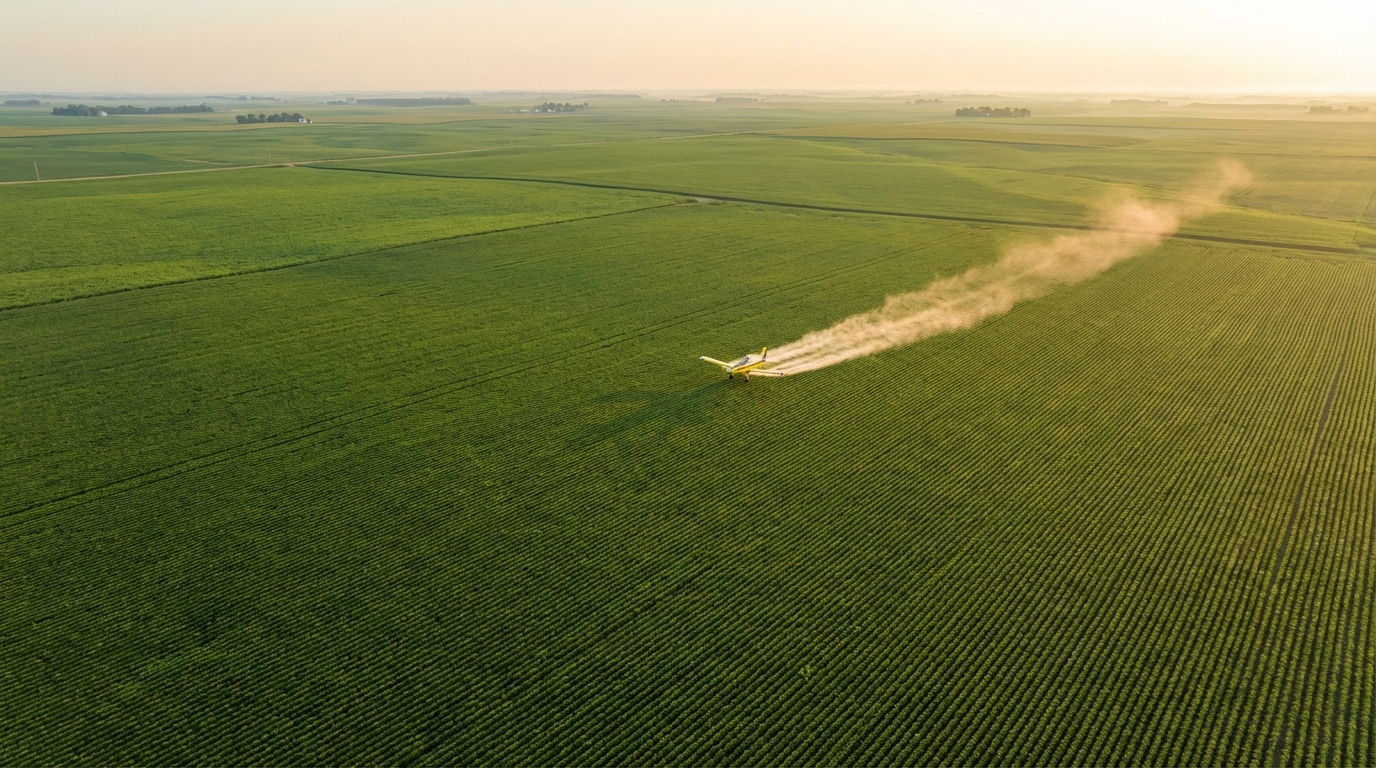
The most widely used herbicide in the United States is making babies smaller at birth. A study published in the Proceedings of the National Academy of Sciences (PNAS) in January 2025 analyzed over 9 million birth records across rural U.S. counties and found that increased glyphosate exposure, driven by the expansion of genetically modified crops since 1996, significantly reduced birth weights and shortened pregnancies.
At average 2012 exposure levels, birth weight dropped by 23 to 32 grams. Gestation shortened by about one day. Those numbers may sound modest in isolation, but the harm was concentrated among the most vulnerable babies: infants in the lowest birth weight decile lost up to 75 grams, while those in the highest decile lost just 6 grams. That gap, a 12-to-1 ratio, means glyphosate hits hardest where the margin for healthy development is thinnest.
The study's authors, University of Oregon economists Emmett Reynier and Edward Rubin, put it plainly: "These results conflict with current regulatory guidance, suggest current regulations may be inadequate."
How Glyphosate Entered the Food Chain
Glyphosate is the active ingredient in Roundup, the world's most popular weed killer. The EPA first approved it in 1974. For two decades, it was one herbicide among many.
That changed in 1996 when Monsanto introduced the first genetically modified crops engineered to survive glyphosate application. Farmers could now spray entire fields with Roundup and kill every weed without harming their corn, soybeans, or cotton. Adoption was swift and nearly total across commodity agriculture.
The result: annual U.S. glyphosate use increased approximately 750% since GM crop introduction, according to reporting by Newsweek and Oregon Public Broadcasting. Hundreds of millions of pounds of glyphosate are now applied to American farmland every year. It drifts. It runs off into water. It ends up as residue on harvested grain. And it reaches consumers through the food supply in cereals, oats, bread, and dozens of other staple products.
The EPA, for its part, determined in 2020 that glyphosate "posed no health risks when used as directed." But that assessment was challenged in federal court, and in 2022, the U.S. Court of Appeals voided the EPA's safety finding. The agency's evaluation of glyphosate remains under review.
What the Study Found
Reynier and Rubin built their analysis on three data sources: United Nations FAO crop suitability data (which predicted where GM crops would be adopted based on soil and climate, not farmer choice), historical pesticide application records, and birth records from rural counties spanning 1990 to 2013.
The design was intentional. By using crop suitability as a predictor of glyphosate exposure rather than actual planting decisions, the researchers isolated the effect of the herbicide from other factors that might influence farmer behavior and local health outcomes.
Their findings were stark.
At the average glyphosate intensity recorded in 2012, birth weight fell by 29.8 grams across the study population. Gestation shortened by 1.49 days. In the highest-exposure counties, concentrated in Southern cotton-growing regions and Midwestern corn and soybean communities, infants at the 90th percentile of exposure experienced approximately 100 grams of birth weight reduction, according to Oregon Public Broadcasting's reporting on the study.
The harm was not distributed equally across the birth weight spectrum. "The glyphosate effect on birthweight in the first decile is 12 times larger than in the tenth decile," the PNAS study reported. The smallest babies, those already at biological risk, bore a disproportionate share of the damage.
Edward Rubin, an assistant professor of economics at the University of Oregon, described the mechanism in terms anyone can grasp: "It's like being sick and then getting hit with another illness. You're more vulnerable."
A Racial Divide in Exposure and Harm
The study also documented a sharp racial disparity. The effect of glyphosate on birth weight was 1.8 times larger for births to non-White mothers compared to White mothers. Babies born to Black mothers, female babies, and those born to unmarried parents faced the highest risk, according to analysis by Beyond Pesticides.
The geography of this disparity is not random. The highest-exposure counties, where GM cotton, corn, and soybeans dominate the agricultural economy, are disproportionately home to communities of color in the rural South and Midwest. In those higher-suitability counties, the probability of preterm birth increased by 1.64 percentage points, per the Beyond Pesticides analysis of the PNAS data.
The researchers did not frame these findings as a call for an immediate ban. "We're not asking for a ban, we're just asking for a reevaluation of this stance," Rubin told Oregon Public Broadcasting. But he was direct about the policy implications: "I think something has to change. Regulators could admit that glyphosate exposure presents some concerns for human health."
The Economic Cost
Lower birth weights and shorter pregnancies are not only health concerns. They carry enormous economic consequences.
Pre-term births cost an estimated $82,000 in additional medical, educational, and other expenses per birth, according to the University of Oregon press release accompanying the study. Scaled to the national level, the researchers estimated the infant health effects of glyphosate translate to between $750 million and $1.1 billion in annual expenses.
That figure accounts only for the measurable costs associated with birth outcomes. It does not include potential long-term developmental effects, chronic health conditions, or the broader environmental contamination that accompanies widespread herbicide use.
What This Means for You
Glyphosate is one of the most common pesticide residues detected in food testing. It shows up in oats, wheat, cereals, snack bars, and dozens of other products that line grocery store shelves. For pregnant women and parents of young children, this study adds weight to a growing body of evidence that reducing pesticide exposure through food choices matters.
Practical steps to limit exposure include choosing certified organic products when possible (organic standards prohibit glyphosate application), washing produce thoroughly, and varying grain sources to avoid repeated exposure from a single crop.
Emmett Reynier, the study's lead author and a doctoral candidate at the University of Oregon, acknowledged what drew him to the research: "We had heard some pretty broad claims about the effects of pesticides on health that seemed to be based more on correlations than on causal effects." His study set out to move beyond correlation. The causal evidence it produced is difficult to dismiss.
For families who want to act now rather than wait for regulators, barcode-scanning apps like VeriFoods let consumers check whether specific products have been independently tested for pesticide residues, including glyphosate, before buying them. That product-level transparency fills a gap the regulatory system has left wide open.
The EPA's own safety determination was thrown out by a federal court in 2022. The reassessment this study demands has not happened. Until it does, the burden of protecting families from glyphosate in the food supply falls on consumers themselves.
Sources
https://pmc.ncbi.nlm.nih.gov/articles/PMC11761964/ - Proceedings of the National Academy of Sciences, "Glyphosate exposure and GM seed rollout unequally reduced perinatal health," January 14, 2025
https://www.newsweek.com/glyphosate-low-birth-weight-rural-counties-herbicide-2020499 - Newsweek, "Common Herbicide Linked to Low Birth Weights in Rural Areas," January 24, 2025
https://www.opb.org/article/2025/01/27/university-oregon-glyphosate-herbicide-health/ - Oregon Public Broadcasting, "University of Oregon study finds link between widely used herbicide and infant health," January 27, 2025
https://www.news-medical.net/news/20250121/Study-links-increased-glyphosate-exposure-to-harmful-effects-on-infant-health.aspx - News-Medical.net, "Study links increased glyphosate exposure to harmful effects on infant health," January 21, 2025
https://beyondpesticides.org/dailynewsblog/2025/02/exposure-to-glyphosate-herbicide-adversely-affects-neonatal-health-study-finds/ - Beyond Pesticides, "Exposure to Glyphosate Herbicide Adversely Affects Perinatal Health, Study Finds," February 20, 2025
Related Articles
Florida Tests Find Glyphosate in 75% of Popular Bread Brands
Six out of eight popular bread products sold in American grocery stores contain glyphosate, the weed-killing chemical...
PFAS in Pesticides: Hidden 'Forever Chemicals' Threaten U.S. Food Supply
By VeriFoods A recent study has brought to light a deeply concerning practice in American agriculture: the intentional...

We Tested 100 Organic Baby pouches for Heavy Metals and Pesticides — Here’s What We Found
Parents trust baby food brands to provide their children with safe and nutritious meals, but recent testing of 100...