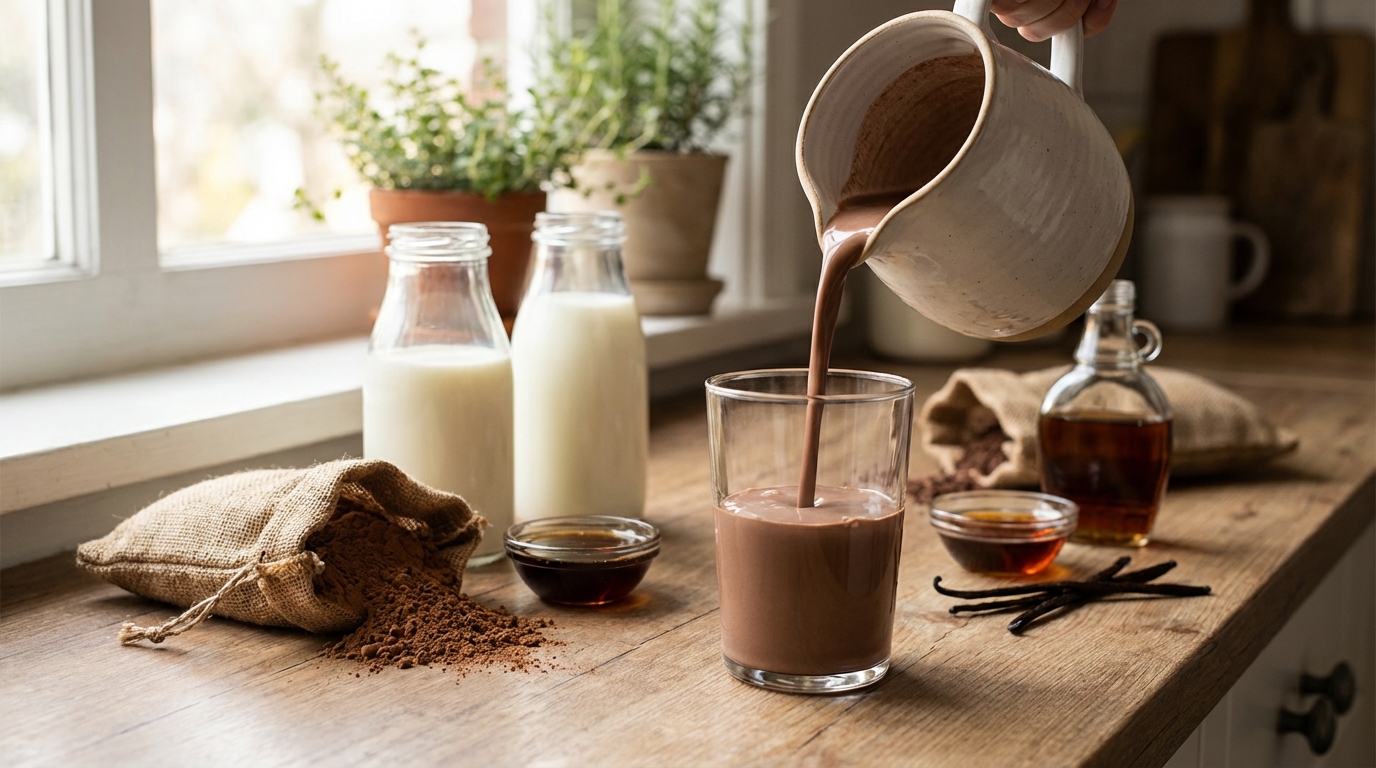
Say No to Carrageenan: Make Your Own Delicious Chocolate Milk at Home
In recent years, concerns have grown about the food additive carrageenan, which is commonly used in processed foods—including chocolate milk—to keep the product smooth and well-emulsified. Some studies and consumer reports suggest that carrageenan may trigger gastrointestinal inflammation, bloating, and other digestive issues, even though regulatory agencies (like the FDA and EFSA) generally regard it as safe at typical consumption levels[1]. Regardless of the ongoing debate, many people now choose to avoid carrageenan in favor of cleaner, homemade alternatives.
The Carrageenan Controversy
Carrageenan is derived from red seaweed and is valued by manufacturers for its ability to stabilize and thicken low‐fat and non‐fat products. In chocolate milk, it helps to keep cocoa particles evenly suspended so that the drink stays uniform on the shelf. However, research—primarily from animal studies and in vitro experiments—has raised concerns that carrageenan might contribute to:
- Inflammation and gastrointestinal distress: Some studies suggest that even food-grade carrageenan can trigger inflammation in the gut.
- Disruption of the intestinal barrier: There is evidence indicating that carrageenan can increase intestinal permeability, sometimes described as a “leaky gut.”
- Digestive disorders: Reports have linked carrageenan consumption with conditions like irritable bowel syndrome (IBS) and ulcerative colitis.
While many of these findings are still debated and the human studies are limited, the uncertainty has driven consumers to seek alternatives to commercially processed products that contain carrageenan[2].
Carrageenan in Commercial Chocolate Milk
Nearly all commercially available chocolate milks—especially the low-fat and processed varieties—rely on carrageenan as an emulsifier. Its role is to prevent cocoa from settling at the bottom of the container and to give the milk a consistent texture. But with growing health concerns and a desire for simpler ingredients, making your own chocolate milk at home becomes an appealing and healthy alternative.
Homemade Chocolate Milk Recipe
By making chocolate milk yourself, you completely sidestep the need for carrageenan and other unnecessary additives. Plus, you have complete control over the ingredients!
Ingredients (per cup of milk)
- 1 cup of your favorite milk (dairy or plant-based)
- 1 tablespoon of Dutch cocoa powder
(Choose a high-quality cocoa for rich flavor.) - 1 tablespoon of honey or maple syrup
(Adjust to taste for sweetness.)
Equipment
- A blender or an immersion blender
(This helps mix the cocoa evenly with the milk for a smooth texture.)
Instructions
1. Combine Ingredients:
Pour 1 cup of milk into your blender. Add 1 tablespoon of Dutch cocoa powder and 1 tablespoon of honey (or maple syrup).
2. Blend:
Blend on high until the cocoa is fully dissolved and the mixture is smooth. An immersion blender works just as well if you prefer blending directly in a cup or jar.
3. Taste and Adjust:
Taste the chocolate milk. If you like it sweeter or richer, add a bit more honey or cocoa powder, and blend again briefly.
4. Serve and Enjoy:
Pour your homemade chocolate milk into a glass, add some ice if desired, and enjoy a natural, additive-free treat!
Final Thoughts
Avoiding carrageenan is just one way to take control of what you consume. By making your own chocolate milk, you eliminate the need for commercial emulsifiers while enjoying a fresh, creamy beverage. Whether you’re opting for dairy or your favorite plant-based milk, this simple recipe gives you a delicious treat without the worries linked to additives like carrageenan.
Feel free to share your own recipes and variations in the comments below!
References:
1: https://www.healthline.com/health/food-nutrition/carrageenan
2: https://www.psu.edu/news/research/story/keeping-chocolate-milk-smooth-stable-without-carrageenan
Related Articles
EU Banned Titanium Dioxide in Food; It's Still in 11,000+ US Products Including Popular Candy
New research raises fresh concerns about a whitening chemical the EU banned three years ago. It's still in your candy...
Companies Pledge to Remove Artificial Dyes by 2028: What It Means for Your Health
By VeriFoods A significant shift is underway in the world of ice cream and frozen desserts. Dozens of major companies...
FDA Bans Red Dye No. 3 After 35 Years of Inaction
On January 15, 2025, the FDA revoked its authorization for Red Dye No. 3 in food and ingested drugs. The agency cited a...