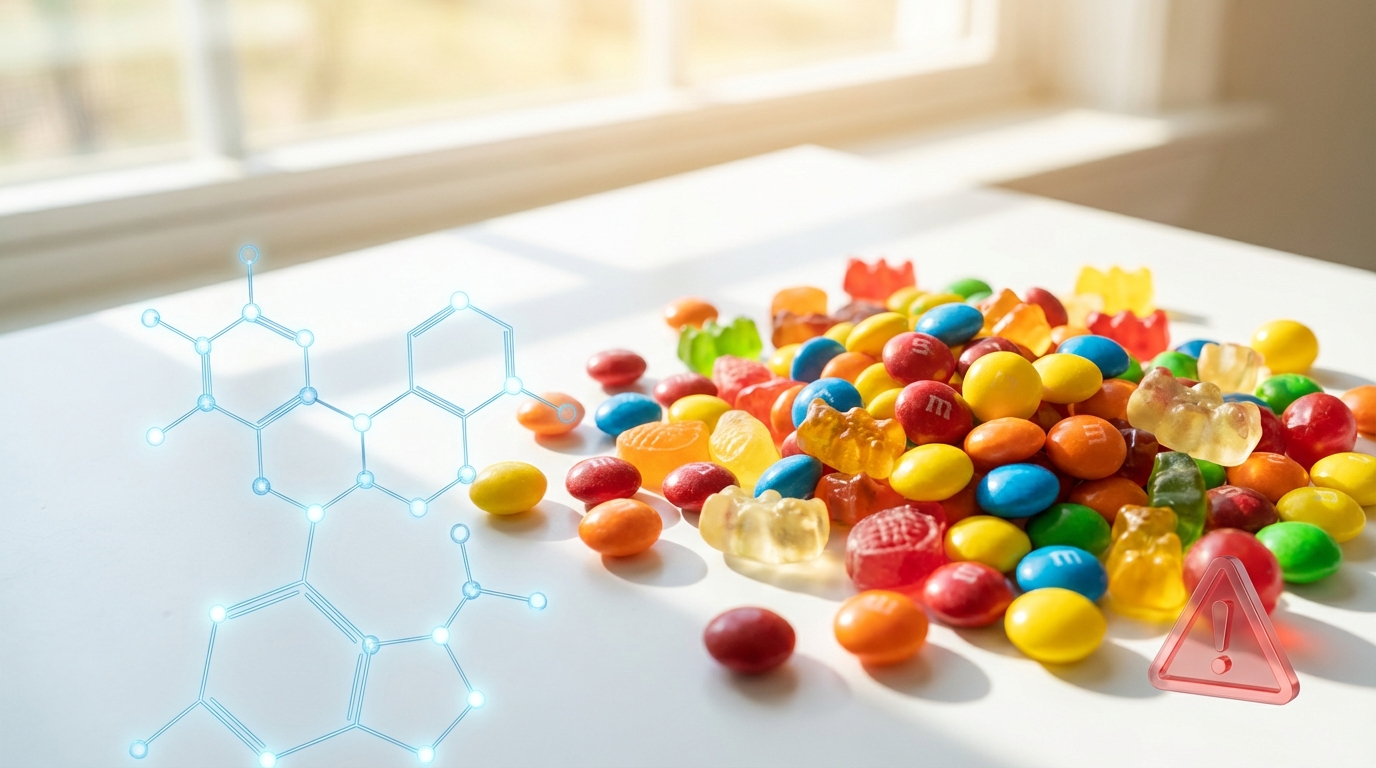
EU Banned Titanium Dioxide in Food; It's Still in 11,000+ US Products Including Popular Candy
New research raises fresh concerns about a whitening chemical the EU banned three years ago. It's still in your candy aisle.
If you've ever wondered why the coating on M&Ms looks so perfectly white, or how Skittles achieve that eye-catching brightness, the answer is titanium dioxide—a chemical additive used to whiten and brighten processed foods. It's also the same ingredient the European Union banned in 2022 over concerns about DNA damage, and it's now linked to even more serious health effects.
New peer-reviewed research published in June 2025 reveals that titanium dioxide nanoparticles act as endocrine disruptors, impairing glucose regulation and potentially contributing to metabolic disorders like type 2 diabetes and obesity. Yet despite mounting evidence and regulatory action abroad, the FDA continues to allow titanium dioxide in an estimated 11,000+ U.S. food products.
What the New Research Found
A team of researchers at China's Jiaxing Nanhu University conducted a carefully designed study comparing three groups of mice: one fed titanium dioxide nanoparticles, one fed larger microparticles, and a control group receiving no titanium dioxide at all. The results were striking.
The nanoparticle-fed mice showed significantly higher blood glucose levels compared to both control groups. They also had lower levels of gut hormones that signal satiety, aid digestion, and regulate glucose—hormones that play a critical role in metabolic health.
The mechanism? Titanium dioxide nanoparticles disrupt enteroendocrine cells—specialized cells lining the intestine that produce hormones controlling hunger, digestion, and blood sugar. The nanoparticles impaired these cells' ability to differentiate and reduced their overall numbers, leading to diminished hormone secretion.
"This is a really big deal because when you start messing with glucose levels – that's diabetes." — Tom Neltner, Director of Unleaded Kids
The study's authors concluded that titanium dioxide nanoparticles function as "potential intestinal endocrine disruptors"—a classification that puts them in the same concerning category as other chemicals known to interfere with hormonal systems.
What Is Titanium Dioxide, and Why Is It in Your Food?
Titanium dioxide (TiO₂) is a naturally occurring mineral that has been used for decades as a whitening agent in foods, cosmetics, and even sunscreen. In processed foods, it serves one primary purpose: making products look brighter, whiter, and more visually appealing.
The additive is especially common in:
- Candy and chewing gum – provides bright white coatings and vibrant colors
- Baked goods – whitens frosting, icing, and dough
- Processed snacks – enhances visual appeal
- Sauces and dressings – creates opacity and brightness
Notable products containing titanium dioxide include household favorites like M&Ms, Skittles, and Chips Ahoy! cookies—products millions of American children and adults consume regularly.
The Regulatory Divide: EU Banned It. The FDA Still Allows It.
The gap between European and American food safety regulation has never been clearer than in the case of titanium dioxide.
European Union: The Precautionary Principle in Action
In May 2021, the European Food Safety Authority (EFSA) published a comprehensive safety reassessment of titanium dioxide (known as E171 in Europe). Their conclusion was unambiguous: titanium dioxide can no longer be considered safe as a food additive.
The EFSA's primary concern was genotoxicity—the ability of a substance to damage DNA. While they couldn't establish a definitive safe consumption level, the authority determined that the potential for genetic damage, combined with evidence of neurotoxicity, immunotoxicity, and intestinal lesions, warranted removal from the food supply.
The EU ban took effect in 2022. Today, any food product containing E171 cannot legally be sold in European markets.
United States: A Different Approach
In the United States, titanium dioxide remains listed as a color additive exempt from certification under FDA regulations (21 CFR 73.575). Food manufacturers can use it at levels up to 1% by weight—and they do, extensively.
The FDA's position throughout has been that titanium dioxide is safe at permitted usage levels. Even as European regulators acted on emerging evidence, the FDA maintained its approval without additional restrictions.
In 2023, public health advocacy groups including Unleaded Kids filed a formal petition with the FDA requesting a ban on titanium dioxide in food. Federal law requires the agency to respond to such petitions within 180 days. As of June 2025—more than two years later—that response has not come.
What Products Contain Titanium Dioxide?
According to the Environmental Working Group's Food Scores Database, titanium dioxide appears in an estimated 11,000+ products on American shelves. While the complete list is extensive, consumers should be particularly aware of:
Common Food Products
- M&Ms (various varieties)
- Skittles (Mars has announced plans to remove TiO₂)
- Chips Ahoy! cookies
- Chewing gums (particularly white-coated varieties)
- Frosting and icing (store-bought cakes, donuts)
- Cream-filled sandwich cookies
- Certain cheeses and creamers (for whitening)
How to Identify It on Labels
In the United States, titanium dioxide must be listed in the ingredient statement. Look for:
- "Titanium dioxide"
- Sometimes listed under "artificial color" or "color added" (less specific)
In European products, the same ingredient would appear as "E171"—though this labeling is no longer relevant for EU-manufactured foods since the ban.
The Health Implications: What We Know and Don't Know
The June 2025 study adds to a growing body of evidence suggesting titanium dioxide may be more harmful than previously understood. The potential health concerns include:
Established Concerns (EU Basis for Ban)
- Genotoxicity: Potential to damage DNA
- Neurotoxicity: Harm to nervous system cells
- Immunotoxicity: Disruption of immune function
- Intestinal lesions: Physical damage to gut lining
Emerging Concerns (New Research)
- Endocrine disruption: Interference with hormone-producing gut cells
- Glucose dysregulation: Elevated blood sugar and impaired satiety signaling
- Metabolic dysfunction: Potential contributions to insulin resistance, type 2 diabetes, and obesity
It's important to note that much of this research is still emerging. The link between titanium dioxide and metabolic disease is suggested by animal studies, not proven in humans. However, the precautionary principle—the idea that we should avoid potential harms even without definitive proof—guided the EU's decision and is increasingly advocated by public health experts in the U.S.
Industry Response: Change May Be Coming
Following the June 2025 study publication, Skittles announced it would stop using titanium dioxide in its products. This follows a broader trend of food manufacturers responding to consumer pressure and emerging science by removing controversial additives.
However, without regulatory requirements, change remains voluntary and inconsistent. While some manufacturers may follow Skittles' lead, thousands of products continue to contain the additive.
What Consumers Can Do
Until the FDA acts, consumers who wish to avoid titanium dioxide can take several practical steps:
1. Read Ingredient Labels Carefully
Check for "titanium dioxide" in the ingredient list, especially on:
- Bright white candies and coatings
- Store-bought baked goods with white frosting
- Chewing gum
2. Choose Whole Foods
Titanium dioxide is primarily used in processed foods. A diet based on whole fruits, vegetables, grains, and proteins naturally avoids this and many other additives.
3. Support Brands That Have Removed TiO₂
Some manufacturers have already eliminated titanium dioxide from their formulations. Research brands committed to cleaner ingredient lists.
4. Stay Informed
The regulatory landscape around food additives is evolving rapidly. The FDA's new chemical review process, launched in May 2025, may eventually address titanium dioxide among other chemicals of concern.
5. Know Your State Laws
Texas recently passed SB 25, requiring warning labels on foods containing ingredients banned in the EU, Canada, UK, or Australia. Titanium dioxide qualifies under this law. Beginning January 1, 2027, products containing TiO₂ sold in Texas will carry warning labels—potentially creating market pressure for broader reformulation.
The Bottom Line
The story of titanium dioxide encapsulates a fundamental challenge in American food safety: a regulatory system that often waits for definitive proof of harm before acting, while other regions take preventive steps based on emerging evidence.
Three years after the EU banned titanium dioxide over DNA damage concerns, new research suggests the additive may also disrupt hormones and impair glucose regulation—potential contributors to diabetes and obesity. Yet it remains in thousands of products American families consume daily, from the candy in Halloween buckets to the cookies in lunchboxes.
For consumers, the message is clear: the responsibility currently falls on individuals to read labels and make informed choices. Whether the FDA will eventually follow Europe's lead—and when—remains to be seen.
This article was researched and produced by the VeriFoods editorial team. Sources include peer-reviewed research, government regulatory documents, and consumer advocacy databases. Last updated: February 12, 2026.
Related Articles
Companies Pledge to Remove Artificial Dyes by 2028: What It Means for Your Health
By VeriFoods A significant shift is underway in the world of ice cream and frozen desserts. Dozens of major companies...

Say No to Carrageenan: Make Your Own Delicious Chocolate Milk at Home
In recent years, concerns have grown about the food additive carrageenan, which is commonly used in processed...

FDA Bans Red Dye No. 3 After 35 Years of Inaction
On January 15, 2025, the FDA revoked its authorization for Red Dye No. 3 in food and ingested drugs. The agency cited a...