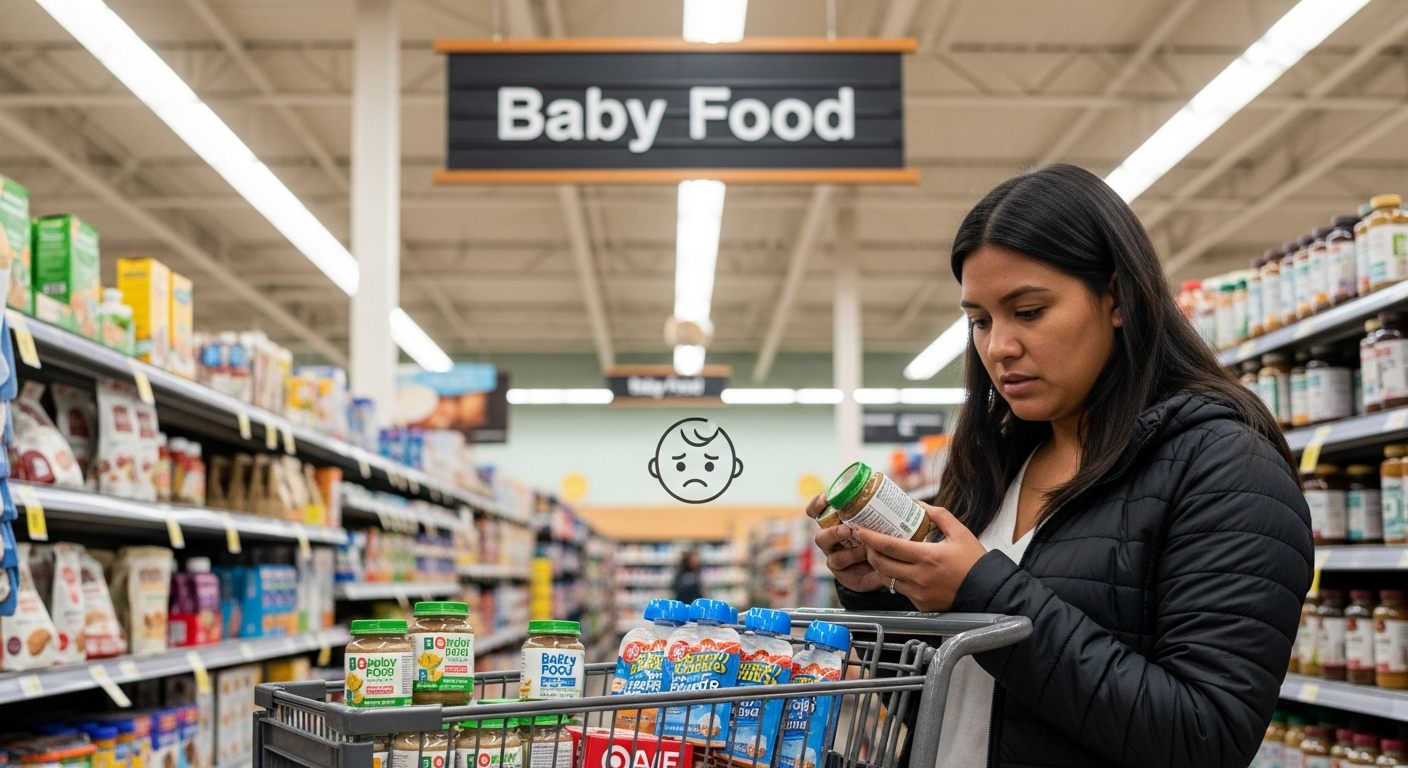
29 Pesticides Found in Target's Baby Food -- Including 5 'Forever Chemicals'
Testing by Friends of the Earth in November 2025 found 29 pesticides in Target's Good & Gather baby food products, including 16 classified as highly hazardous to human health, 10 that are banned in the European Union, and 5 that meet the chemical definition of PFAS "forever chemicals." Even more troubling: contamination levels have increased since last year.
What the Testing Found
Friends of the Earth tested samples of Target's house-brand Good & Gather Apple Fruit Puree and Pear Fruit Puree, products specifically marketed for babies. The results were staggering.
Among the 29 pesticide residues detected, 16 are classified as highly hazardous by internationally recognized health authorities. Eight are linked to hormone disruption, which is particularly dangerous for developing infants whose endocrine systems are still forming. Six are linked to cancer. Ten of the detected pesticides are banned in the European Union, meaning European regulators have determined they pose unacceptable risks -- yet they remain legal in food sold to American babies.
The testing also found residues of two classes of neurotoxic pesticides: organophosphates and neonicotinoids. Organophosphate pesticide metabolites were detected in all of the pear and apple baby food samples tested. These compounds are known to interfere with nervous system development in children.
Forever Chemicals in Baby Food
Five of the pesticides found in Target's baby food meet the scientific definition of PFAS -- per- and polyfluoroalkyl substances, commonly known as forever chemicals. These include flonicamid, flubendiamide, fluopyram, novaluron, and trifloxystrobin.
PFAS chemicals do not break down in the environment and accumulate in the human body over time. They are associated with immune system suppression, liver damage, thyroid disease, reduced fertility, high cholesterol, obesity, and cancer. Finding them in food products designed for infants raises profound questions about the adequacy of U.S. pesticide regulation.
Getting Worse, Not Better
This is the second year Friends of the Earth has tested Target's baby food products. The 2025 results are worse than 2024: more pesticides were detected, and more of those pesticides were classified as highly hazardous. This trend suggests that contamination in the supply chain is not being addressed and may be worsening.
Since 2024, Friends of the Earth and more than 40 other environmental and public health organizations have been calling on Target to address pesticide use in its supply chain. Target has not responded to these calls.
What Europe Bans, America Feeds to Babies
The regulatory gap between the United States and the European Union is one of the most striking aspects of these findings. Ten of the 29 pesticides found in Target's baby food are banned in the EU, where regulators apply the precautionary principle: if there is credible evidence of harm, a chemical is restricted until proven safe.
The United States takes the opposite approach. Pesticides remain legal until definitive proof of harm forces regulatory action, a process that can take decades. In the meantime, American infants are exposed to chemicals that European regulators have determined are too dangerous for their food supply.
Only Three States Mandate Testing
The regulatory failure extends beyond the federal level. Only three states -- California, Maryland, and Virginia -- currently mandate that baby food sold within their borders be tested for toxic contaminants including heavy metals. The remaining 47 states have no such requirements, leaving parents to rely on voluntary testing by manufacturers who have a financial incentive to minimize findings.
The FDA finalized guidance on lead action levels for baby food in January 2025, but these are guidance levels, not enforceable limits. For pesticides in baby food, there are no specific federal standards that account for infant vulnerability. The tolerance levels set for pesticide residues are based on adult exposure calculations, not the metabolic realities of a six-month-old.
How to Protect Your Baby
Parents can take steps to reduce their children's pesticide exposure while the regulatory system catches up:
- Choose organic baby food whenever possible. Organic certification prohibits the use of synthetic pesticides, including those found in this testing.
- Make baby food at home from organic whole fruits and vegetables when practical.
- Wash all produce thoroughly before preparing food for infants, even organic produce.
- Diversify foods rather than relying heavily on any single product, as this limits exposure to any one set of contaminants.
- Check product safety ratings using apps like VeriFoods that aggregate testing data and safety information.
- Advocate for change by contacting Target and your elected officials about strengthening baby food safety standards.
A System Failing the Most Vulnerable
The presence of 29 pesticides -- including neurotoxins and forever chemicals -- in a product designed for infants and sold by one of America's largest retailers is not an isolated quality control issue. It reflects a systemic failure in which the United States permits chemicals in food that other developed nations have banned, sets safety thresholds based on adult bodies rather than infant vulnerability, and relies on voluntary industry compliance rather than mandatory testing.
Until federal standards catch up with the science, the burden of protecting children falls disproportionately on parents who must navigate a marketplace where the labels tell them almost nothing about what is actually in the food.
Stay ahead of the label.
Get early access to VeriFoods and be the first to see what's really in your food.
Sources
- Friends of the Earth - "One Year Later, Toxic Pesticides Still Present In Target's Baby Food" - November 2025. https://foe.org/news/toxic-pesticides-still-present-in-targets-baby-food/
- The New Lede - "Baby food fears: Are pesticides and other contaminants posing threats to children?" - November 2025. https://www.thenewlede.org/2025/11/baby-food-fears-are-pesticides-and-other-contaminants-posing-threats-to-children/
- Children's Health Defense - "21 Pesticides Found in Baby Food Sold by Target" - 2025. https://childrenshealthdefense.org/defender/21-pesticides-baby-food-sold-by-target/
- Friends of the Earth - "Toxic Pesticides in Target's Baby Food" - 2025. https://foe.org/toxic-pesticides-found-in-target-baby-food/
Related Articles
The EPA Just Approved More 'Forever Chemical' Pesticides on Your Food
In November 2025, the EPA approved multiple PFAS-containing pesticides for use on food crops including oranges,...
Toxic Chemicals in Your Food Are Costing the World $3 Trillion a Year
A landmark December 2025 report reveals that just four groups of toxic chemicals in the global food system are causing...
EPA Rolls Back PFAS Water Protections: 73 Million Americans Left Exposed to 'Forever Chemicals'
EPA rollback leaves 73 million Americans exposed to PFAS forever chemicals as four compound standards are eliminated...