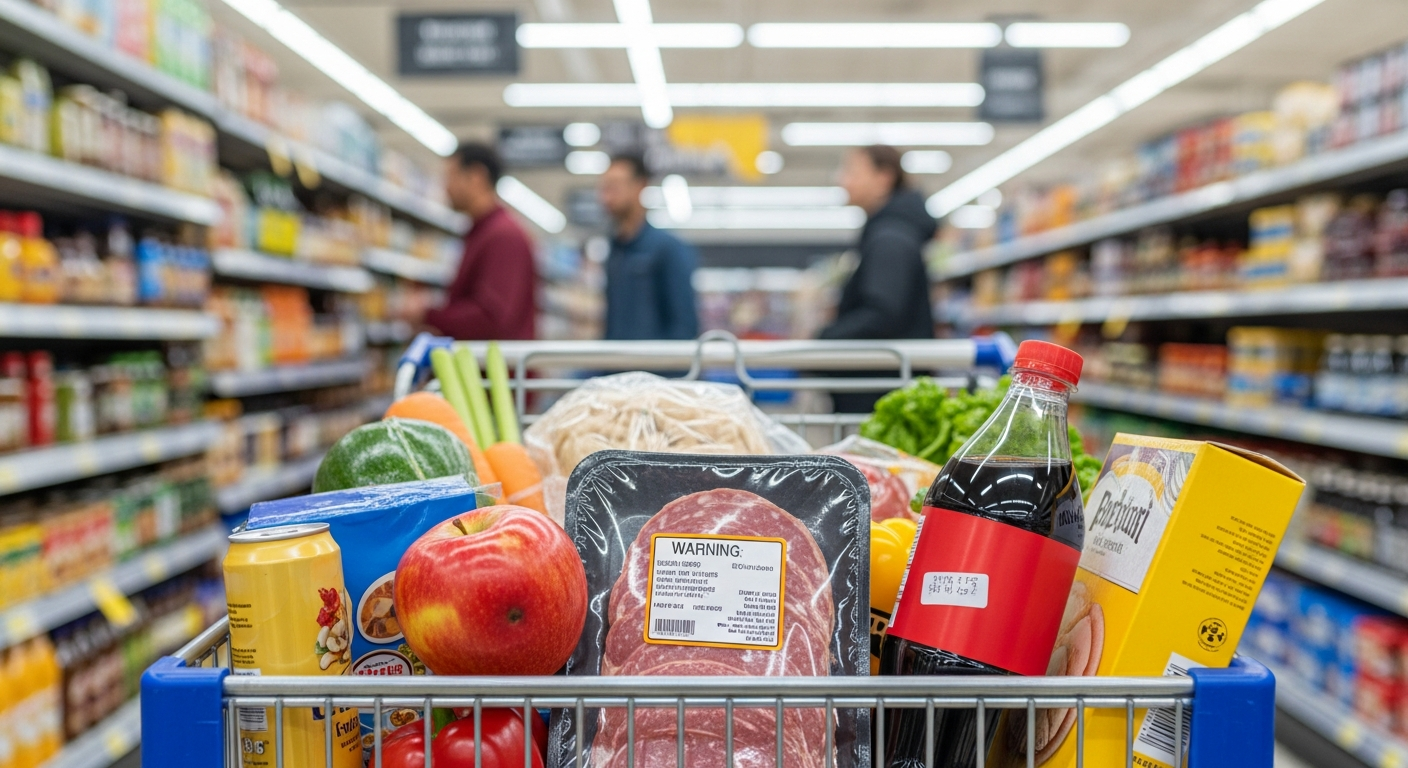
Toxic Chemicals in Your Food Are Costing the World $3 Trillion a Year
Every year, four groups of toxic chemicals quietly infiltrate the global food supply through pesticides on crops, plastic packaging around groceries, industrial runoff into farmland, and synthetic coatings on cookware. A landmark report released in December 2025 reveals for the first time just how much damage they are doing: nearly $3 trillion annually in health costs and environmental destruction.
The report, titled "Invisible Ingredients," was published by the research consultancy Systemiq and represents the most comprehensive global assessment to date of how chemical contamination in the food system affects human health, ecosystems, and economic stability.
The $2.8 Trillion Price Tag
The numbers are staggering. According to the Systemiq analysis, four chemical groups alone are responsible for $2.8 trillion in combined annual harm through the food system:
- $2.2 trillion in direct healthcare costs, representing 2-3% of global GDP
- $640 billion in environmental damage, including the cost of removing PFAS and pesticides from drinking water and agricultural losses
To put this in perspective, the annual cost of food chemical contamination exceeds the entire GDP of France. It is larger than the global automotive industry. And it is paid not by the companies producing these chemicals, but by ordinary people through medical bills, lost productivity, and degraded ecosystems.
The Four Chemical Groups
The report zeroes in on four families of synthetic chemicals that have become ubiquitous in the modern food system.
Phthalates are plasticizers found in food packaging, processing equipment, and food-handling gloves. They migrate into food during storage and processing, particularly in fatty or acidic foods. Research links phthalate exposure to reproductive disorders, hormonal disruption, and developmental problems in children.
Bisphenols, most notably BPA and its replacements BPS and BPF, line metal food cans and coat receipt paper. They leach into food under heat, acidity, or prolonged storage. Despite the European Union banning bisphenols in food contact materials in January 2025, the FDA continues to maintain that BPA is safe at current exposure levels.
Pesticides are applied directly to the crops that become our food. An estimated 2.5 million pounds of PFAS-containing pesticides are sprayed on California farmland alone each year. The Environmental Working Group's 2025 analysis found pesticide residues on 75% of non-organic fruits and vegetables tested, with 123 different pesticides detected across just 17 types of produce.
PFAS, known as "forever chemicals," enter the food supply through contaminated water, pesticide formulations, and food packaging. They accumulate in the human body over time. The FDA's own Total Diet Study found PFAS in 7% of food samples, including shrimp, beef, chicken, and milk, yet the agency has not set enforceable limits.
How These Chemicals Reach Your Plate
The contamination pathways are disturbingly varied. Pesticides are sprayed on crops and absorbed into soil and groundwater. PFAS in agricultural runoff contaminate irrigation water. Phthalates and bisphenols leach from plastic packaging and can linings during storage and heating. Industrial emissions settle on farmland, where they are taken up by plants and animals.
The result is that these chemicals are nearly impossible to avoid entirely. They appear in organic and conventional food, in fresh produce and processed products, in tap water and bottled water.
The Human Cost
The health consequences documented in the report span the entire human lifespan. Exposure begins before birth, as these chemicals cross the placental barrier.
The report links these four chemical groups to:
- Birth defects and neurodevelopmental conditions
- Cancers, including breast, prostate, kidney, and testicular
- Fertility issues and reproductive disorders
- Endocrine disruption affecting hormones at every life stage
- Cardiovascular and respiratory disease
- Obesity, diabetes, and metabolic syndrome
Perhaps the most alarming projection: if current exposure levels persist, the report estimates there could be 200 to 700 million fewer births globally between 2025 and 2100. At the high end, that is equivalent to the entire population of Southeast Asia.
Existing Solutions Could Cut Harm by 70%
The report is not without hope. Systemiq found that existing technologies and regulatory approaches could reduce the combined health and environmental harms by approximately 70%, delivering up to $1.9 trillion in annual savings worldwide.
The solutions are not futuristic or speculative. They include:
- Replacing toxic pesticides with safer alternatives already available on the market
- Switching food packaging materials away from plastics containing phthalates and bisphenols
- Implementing comprehensive PFAS bans in food contact materials, as the EU has done
- Shifting regulatory frameworks from "aftermarket proof of harm" to "premarket proof of safety"
The fundamental problem, according to the report, is not a lack of solutions but a lack of political will to implement them. The current regulatory model requires decades of evidence that a chemical is harmful before action is taken, by which time billions of people have already been exposed.
What This Means for You
The $3 trillion figure is abstract. What is concrete is that these chemicals are in the food you buy every week, in the packaging that holds it, and in the water you use to cook it.
Until regulatory systems catch up, consumers are left to navigate this landscape on their own. Understanding which chemicals are in your food, which products have safer profiles, and which contamination pathways pose the greatest risk is not optional. It is the baseline for protecting your family's health.
The Systemiq report makes one thing clear: the cost of ignorance is $3 trillion a year and counting. The cost of paying attention is considerably less.
Sources
ACS Chemical & Engineering News - "Chemicals in food system cause nearly $3 trillion in annual damage: Report" - December 2025. https://cen.acs.org/food/food-ingredients-packaging-bisphenols-pesticides-phthalates-pfas/103/web/2025/12
Systemiq - "Invisible Ingredients: Tackling toxic chemicals in the food system" - December 2025. https://www.systemiq.earth/reports/invisible-ingredients/
The New Lede - "Toxic chemicals in food cost the world $3 trillion a year, new report finds" - December 2025. https://www.thenewlede.org/2025/12/toxic-chemicals-health-environmental-economic-costs/
Food Packaging Forum - "Report estimates toxic chemicals in food system cost 3 trillion USD per year" - December 2025. https://foodpackagingforum.org/news/report-estimates-toxic-chemicals-in-food-system-cost-3-trillion-usd-per-year
Sustainable Pulse - "Toxic Chemicals in Global Food System Causing $3 Trillion a Year in Health and Environmental Costs" - December 2025. https://sustainablepulse.com/2025/12/10/toxic-chemicals-in-global-food-system-causing-3-trillion-a-year-in-health-and-environmental-costs-new-report/
Moms Across America - "Toxic Chemicals in Global Food System Causing $3 Trillion a Year in Health and Environmental Costs" - December 2025. https://www.momsacrossamerica.com/toxic_chemicals_in_global_food_system
Related Articles
The EPA Just Approved More 'Forever Chemical' Pesticides on Your Food
In November 2025, the EPA approved multiple PFAS-containing pesticides for use on food crops including oranges,...
29 Pesticides Found in Target's Baby Food -- Including 5 'Forever Chemicals'
Friends of the Earth testing found 29 pesticides in Target's Good & Gather baby food, including 16 highly hazardous...
FDA Detects PFAS in 7% of Food Samples as EPA Greenlights PFAS Pesticides on Crops
FDA testing found PFAS contamination in 7.2% of 542 food samples, including seafood, meat, dairy, and kale. Meanwhile,...