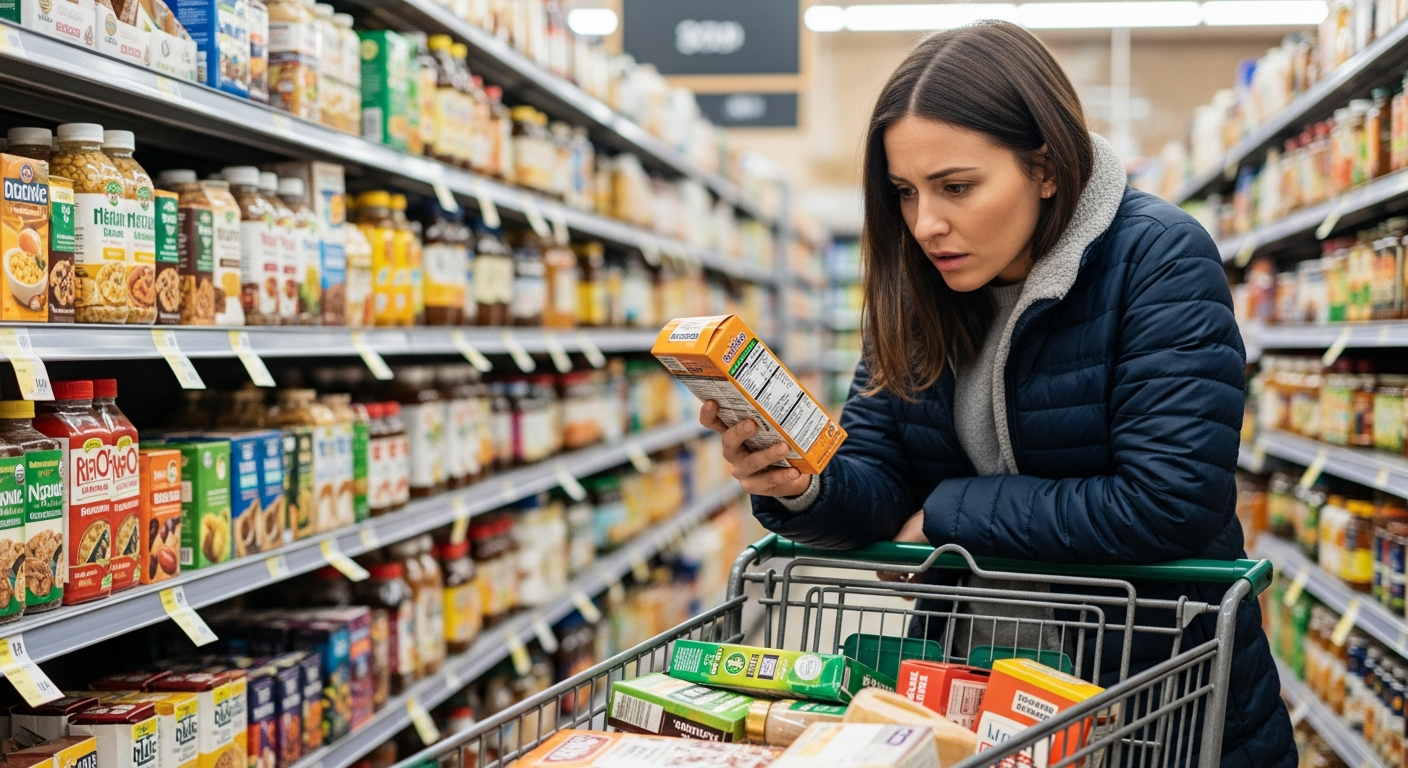
38 States Are Moving to Ban Toxic Food Additives. Here's What You Need to Know.
Something remarkable is happening in state legislatures across America. In 2023, just 4 bills targeting food additives were introduced in 3 states. In 2024, the number rose to 27 bills across 13 states. By 2025, over 140 bills had been introduced across 38 states, a 35-fold increase in two years.
The message from state lawmakers is clear: if the federal government will not act on toxic food additives, the states will.
A December 2025 analysis from Harvard Law School's Food Law and Policy Clinic has now confirmed what many hoped: these state bans are constitutionally sound. The legal path is open, and states are moving fast.
The "Standard 11": Additives in the Crosshairs
Across the 140-plus bills, a consistent pattern has emerged. State legislators are targeting the same group of additives, a list that food safety advocates have come to call the "Standard 11":
- Red Dye 3 (Erythrosine) - Already banned by FDA, phased implementation through 2027
- Red Dye 40 (Allura Red) - Linked to behavioral issues in children
- Yellow Dye 5 (Tartrazine) - Associated with hyperactivity and allergic reactions
- Yellow Dye 6 (Sunset Yellow) - Linked to hyperactivity and tumor development in animal studies
- Blue Dye 1 (Brilliant Blue) - Potential neurotoxicity concerns
- Blue Dye 2 (Indigo Carmine) - Brain tumor links in animal research
- Green Dye 3 (Fast Green) - Bladder tumor links in animal studies
- Titanium Dioxide - Banned in the EU since 2022 for genotoxicity concerns
- Brominated Vegetable Oil (BVO) - Banned by FDA in 2024 after decades of use
- Potassium Bromate - Classified as possibly carcinogenic by international agencies
- Propylparaben - Endocrine disruptor used as a preservative
These are not exotic chemicals. They are in candy, cereal, snack foods, baked goods, sports drinks, and thousands of other products that American families buy every week. Many are already banned or restricted in the European Union, Canada, and other countries.
School Food Laws Lead the Charge
The most successful legislative action has focused on children. Of the 140-plus bills introduced in 2025, approximately 70 targeted food served in schools.
Eleven school food restriction laws were enacted in eight states: Arizona, Delaware, Louisiana, Tennessee, Texas, Utah, Virginia, and West Virginia. These laws restrict or ban synthetic dyes, certain preservatives, and in some cases ultra-processed foods in school meals.
West Virginia became the first state in the nation to enforce its school food additive restriction, with the law taking effect on August 1, 2025. The law prohibits specific artificial dyes and additives in food served in public school cafeterias.
The school food focus has proven to be effective legislative strategy. It is difficult for opponents to argue against removing chemicals linked to cancer and behavioral issues from the food served to children in public institutions.
Harvard Says States Have the Legal Authority
The biggest potential obstacle to state action has been the question of federal preemption: whether federal food safety law prevents states from setting their own standards. The food industry has argued that state-level bans would create an unworkable patchwork of regulations and conflict with federal authority.
In December 2025, the Harvard Law School Food Law and Policy Clinic published a definitive analysis of this question, commissioned by the Center for Science in the Public Interest. The conclusion: state food additive bans are neither expressly nor impliedly preempted by federal law.
The report examined four categories of state legislation and found that each category would likely survive legal challenge. State laws banning specific additives in food sold within the state are within the state's authority to protect public health. School meal restrictions face an even clearer legal path, as states have broad authority over their own institutional food service.
The report did identify one narrow area of potential vulnerability. State-mandated warning labels applied to meat and poultry products could face express preemption, because those products are regulated by the USDA rather than the FDA. But for the vast majority of food products, the legal path is clear.
Why States Are Acting
The state-level surge is driven by a combination of factors.
Federal action has been slow. The FDA revoked Red Dye No. 3 but set compliance timelines extending through 2027 and possibly beyond. The agency has asked companies to voluntarily phase out artificial dyes by the end of 2026, but voluntary timelines carry no enforcement mechanism.
Public awareness has increased dramatically. Parents learning that chemicals banned in European school cafeterias are standard ingredients in American children's snacks have pushed legislators to act. Social media has amplified stories about specific additives and their health effects.
The MAHA (Make America Healthy Again) initiative, while primarily focused on federal policy, has created political cover for lawmakers in both parties to support food chemical reform. Protecting children from toxic chemicals in food has emerged as a genuinely bipartisan issue.
And major food companies have already reformulated products for international markets. The same cereal, candy, or snack food often uses natural colorings in the EU version and synthetic dyes in the American version. States are simply asking companies to give American consumers the same products they already sell overseas.
What This Means for Consumers
The immediate effect of the state legislative surge is uneven. If you live in one of the eight states that have enacted school food laws, your children's school meals will begin to change. If your state has passed broader additive restrictions, the products available in your local grocery store may be reformulated.
But the national impact is potentially larger than the state-by-state map suggests. When enough states pass similar legislation, food manufacturers face a practical choice: reformulate products nationally, or manage separate formulations for different markets. Most companies choose national reformulation, because it is simpler and cheaper.
This is already happening. Several major food companies have announced plans to remove artificial dyes from their products, citing both consumer demand and the changing regulatory landscape. The state-level movement is creating market-wide change that benefits consumers everywhere.
For consumers in states that have not yet acted, the gap between what is legal and what is safe remains. Understanding which additives are in the products you buy, and which of those additives are being targeted by legislation across the country, is essential to making informed choices.
Sources
MultiState - "State Food Additive Legislation Surged Across 38 States in 2025" - January 14, 2026. https://www.multistate.us/insider/2026/1/14/state-food-additive-legislation-surged-across-38-states-in-2025-plus-other-food-policy-trends-we-saw-last-year
Harvard Law School CHLPI - "State Regulation of Food Additives and Chemicals" - December 2025. https://chlpi.org/wp-content/uploads/2025/12/State-Regulation-of-Food-Additives-and-Chemicals_FINAL_.pdf
Food Safety Magazine - "Harvard Report Analyzes Potential Preemption, Constitutional Challenges to State Food Additive Laws" - 2025. https://www.food-safety.com/articles/11022-harvard-report-analyzes-potential-preemption-constitutional-challenges-to-state-food-additive-laws
ASTHO - "States Moving to Prohibit Additives and Dyes in Food" - 2025. https://www.astho.org/communications/blog/2025/states-moving-to-prohibit-additives-and-dyes-in-food/
National Agricultural Law Center - "Food Law in the States - 2025 Update." https://nationalaglawcenter.org/food-law-in-the-states-2025-update/
Citizens for Health - "Bright colors, hidden risks: Lawmakers targeted food additives in 2025" - 2025. https://citizens.org/lawmakers-targeted-food-additives-in-2025/
Related Articles
The FDA Promised to Ban Artificial Food Dyes. Instead, It Rewrote the Rules.
The FDA quietly abandoned its pledge to eliminate six synthetic food dyes by 2026, pushed the deadline to 2027, and...
The GRAS Loophole Is Closing: Senate Bill Would Force Companies to Disclose Every Food Ingredient to FDA
The Better Food Disclosure Act, introduced November 6, 2025, would end the self-affirmed GRAS pathway that has allowed...
EU Banned Titanium Dioxide in Food; It's Still in 11,000+ US Products Including Popular Candy
New research raises fresh concerns about a whitening chemical the EU banned three years ago. It's still in your candy...